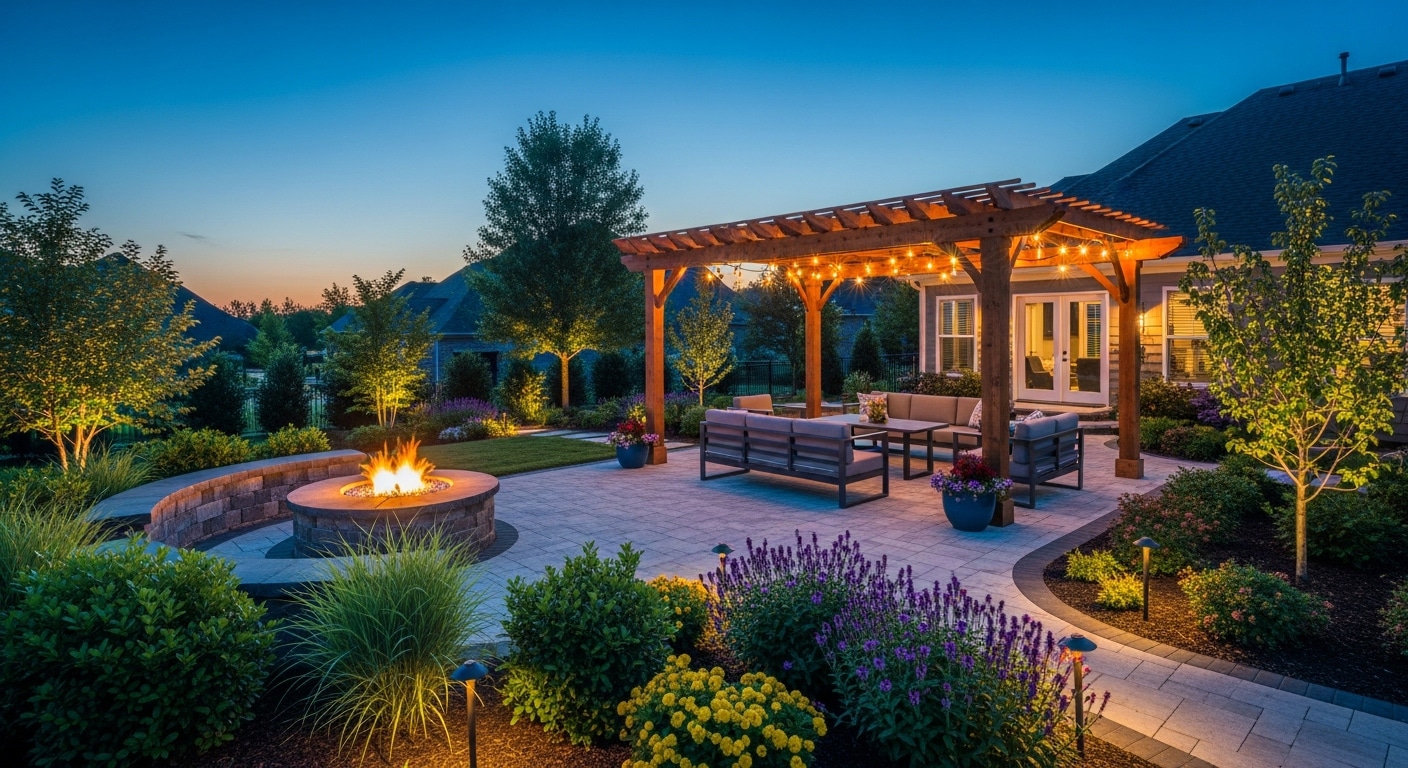
If you’re pricing a pergola for your Tulsa home, you’ve likely noticed that quotes vary widely — sometimes by tens of thousands of dollars. That variance isn’t random. Pergola pricing in northeast Oklahoma is driven by a specific set of factors: material choice, structure size, attachment type, permit requirements, and what you add to the finished build. This guide breaks down exactly what you should expect to pay for a pergola in Tulsa in 2026 — and what separates an investment-grade installation from one that falls apart in three Oklahoma summers.
VistaScapes has designed and built pergolas across Tulsa, Bixby, Jenks, Broken Arrow, and Owasso for over over a decade. The pricing in this guide reflects what we see in the current local market — not national averages that don’t account for Oklahoma’s climate demands, labor costs, or permit landscape.
Pergola Cost Summary: Tulsa, Oklahoma (2026)
| Pergola Type | Typical Cost Range |
|---|---|
| Cedar pergola, basic | $8,000 – $14,000 |
| Cedar pergola, custom | $14,000 – $22,000 |
| Aluminum pergola | $12,000 – $22,000 |
| Louvered / motorized pergola | $20,000 – $32,000+ |
| Attached pergola (add-on to base) | Add $2,000 – $5,000 |
| With outdoor kitchen integration | Add $25,000 – $65,000+ |
These ranges are for fully installed, permitted structures in the Tulsa metro area. They include materials, labor, concrete footings, and basic hardware. They do not include electrical, fans, lighting, or outdoor kitchen additions unless noted.
What Drives Pergola Cost in Tulsa?
Material Selection
Material is the single largest cost variable in any pergola project. In Tulsa, you’re primarily choosing between cedar wood and aluminum — and that choice has long-term implications well beyond the initial price tag.
Cedar is the classic choice for residential pergolas. It offers a warm, natural aesthetic that pairs well with traditional and transitional home styles throughout Midtown Tulsa and older Brookside neighborhoods. Cedar is workable, accepts stain or paint readily, and allows for creative custom detailing like corbels, notched beams, and decorative end cuts. The trade-off in Oklahoma’s climate is maintenance: Tulsa’s UV radiation is significant, and cedar will gray, dry, and crack without professional sealing every two years. That’s a recurring cost many homeowners underestimate at the time of purchase.
Powder-coated aluminum is maintenance-free and dimensionally stable under Oklahoma heat, ice storms, and freeze-thaw cycles. It doesn’t warp, crack, or split. The color is factory-applied and holds without repainting. Aluminum costs more upfront but typically costs less over a 10-year horizon once you account for cedar’s ongoing maintenance requirements. Aluminum is also the only material that supports a motorized louvered roof upgrade — a significant functional advantage for homeowners who want full weather protection without a permanent roof structure.
Structure Size
Most residential pergolas in the Tulsa market run between 12×16 feet and 20×24 feet. Pricing scales roughly linearly with square footage once material type is established. A 12×16 cedar pergola will run meaningfully less than a 20×24 version in the same material. When sizing, factor in furniture clearance — a 12×16 space feels smaller than expected once a dining table, chairs, and traffic flow are accounted for. Most families entertaining outdoors find 16×20 to be the practical minimum for comfortable use.
Attached vs. Freestanding
Whether your pergola attaches to your home or stands independently affects both cost and complexity. Attached pergolas require a ledger board connection to your home’s structure, proper flashing to prevent water infiltration, and compliance with Tulsa building code requirements for load transfer to the existing structure. This adds $2,000–$5,000 to the base project cost depending on the home’s siding material and structural configuration.
Freestanding pergolas avoid those attachment complications but require deeper concrete footings. In Oklahoma, the frost depth is approximately 14–18 inches, but most quality builders pour to at least 36–42 inches for freestanding structures to ensure long-term stability. Footing depth directly affects concrete volume and therefore cost.
Labor
VistaScapes builds all pergolas in-house with our own crew — no subcontractors. Labor typically represents 35–45% of total project cost on a standard installation. When vetting contractors, ask directly whether they use subcontractors and how that affects warranty coverage. A company that subs out installation may not stand behind workmanship issues the same way a self-performing firm does.
Permits
Tulsa requires building permits for permanent outdoor structures above a certain size threshold. Permit fees typically run $200–$600 depending on project scope and valuation. Always include permit costs in your budget — and always use a contractor who pulls permits. Unpermitted structures create problems at resale: title companies flag them, buyers request removal, and your homeowner’s insurance may not cover a loss tied to an unpermitted structure.
Additions and Upgrades
The base structure is rarely the end of the budget conversation. Common additions in Tulsa pergola projects and their typical installed costs:
- Ceiling fans: $300–$800 each installed (requires electrical rough-in if not existing)
- String lights or LED overhead fixtures: $400–$2,000 depending on system complexity
- Outdoor audio speakers: $800–$3,000 for a quality system
- Gutters on louvered systems: $400–$900
- Shade screens or curtain tracks: $600–$2,500
- Electrical rough-in (if new): $800–$2,500 depending on distance from panel
Cedar Pergola Costs in Tulsa
A basic cedar pergola — standard beam profiles, simple post design, no decorative detailing — installed on an existing concrete patio in Tulsa will typically fall in the $8,000–$14,000 range for a 12×16 to 14×20 structure. This assumes a freestanding configuration with standard hardware and a straightforward site.
Custom cedar pergolas with larger footprints, decorative corbels, notched beams, custom end treatments, or house-attachment details will run $14,000–$22,000 or more depending on complexity. Custom work is where cedar’s material properties shine: the wood can be cut and shaped on-site in ways that aluminum profiles cannot replicate.
The long-term cost equation for cedar in Oklahoma requires honest accounting. Professional sealing or staining every two years runs approximately $500–$1,000 per application depending on structure size. Over 10 years, that’s $2,500–$5,000 in maintenance costs on top of the original installation — costs that aluminum owners don’t face. Cedar that goes unmaintained in Tulsa’s climate will show visible degradation within 3–5 years and may require partial replacement of cracked or checked timbers within a decade.
Cedar remains a legitimate choice for homeowners who value the aesthetic and are committed to the maintenance schedule. It is not the right choice for homeowners who want a set-it-and-forget-it structure.
Aluminum Pergola Costs in Tulsa
Aluminum pergolas start at approximately $12,000–$14,000 for a standard configuration in the 12×16 to 14×20 range. Custom sizes and color selections are available — powder-coat options range from standard white, black, and bronze to custom color matches — and larger or more complex configurations will push into the $18,000–$22,000 range.
The higher entry cost relative to basic cedar is the primary objection we hear from homeowners early in the design process. The response to that objection is total cost of ownership: aluminum requires no resealing, no restaining, and no periodic timber replacement. It doesn’t fade in Oklahoma UV. It doesn’t split in ice storms. A quality aluminum pergola installed today should still look identical in 20 years with nothing more than an occasional rinse.
Aluminum is also the only material that supports a louvered roof upgrade. If you think there’s any chance you’ll want to add a motorized roof system later, starting with aluminum preserves that option. Cedar cannot be retrofitted with a louvered system — it would require full replacement of the structure.
In the newer subdivisions of south Tulsa, Bixby, Jenks, and Owasso — where homes tend toward cleaner, more modern architectural styles — aluminum’s profile typically integrates better with the home’s exterior than cedar would. The material choice is partly aesthetic and partly functional, and the right answer depends on your home’s style, your maintenance preferences, and your long-term plans.
Louvered and Motorized Pergola Costs in Tulsa
Louvered pergola systems represent the top tier of the outdoor structure market. These are aluminum-framed pergolas with a motorized louver roof — individual aluminum blades that rotate open and closed via a motor, controlled by remote, wall switch, or smartphone app. When open, they function like a traditional pergola, letting in light and air. When closed, they shed rain and block direct sun, effectively creating a covered outdoor room without a permanent roof structure.
In Tulsa, louvered pergola systems typically range from $20,000 to $32,000 or more depending on size, brand, and features. The higher cost reflects the motorized mechanism, higher-grade aluminum extrusions, integrated gutter channels (water drains through the posts rather than off the edges), and the engineering required for weather-rated performance.
Premium louvered systems offer features including:
- Rain sensors: The system detects rain and automatically closes the louvers before you get wet — even when you’re not home.
- Wind sensors: Louvers adjust or close automatically at pre-set wind speeds to prevent damage.
- Smart home integration: Compatible systems connect to Google Home, Amazon Alexa, or proprietary apps for voice and remote control.
- Integrated LED lighting: Many systems include LED strips built into the louver frames, eliminating the need for separate lighting installation.
- Side screens: Motorized or track-mounted screens can be added to create an enclosed outdoor room for insect control or privacy.
For Tulsa homeowners who want maximum outdoor livability — particularly those building or renovating a full outdoor living space with kitchen, dining, and lounge areas — a louvered system eliminates the weather-dependency problem that limits the usefulness of traditional open pergolas in Oklahoma summers.
Is a Pergola Worth It in Oklahoma?
Northeast Oklahoma’s outdoor season runs roughly April through October — seven months of usable outdoor weather. But within that window, June, July, and August routinely see temperatures above 95–100°F by mid-afternoon. An uncovered patio in Tulsa is functionally unusable during peak summer hours. Direct sun on a south- or west-facing patio can push surface temperatures well above the ambient air temperature.
A quality pergola — even an open-roof design — reduces direct solar radiation significantly during the hours it matters most. Combined with ceiling fans and the right orientation, a well-designed pergola extends the practical outdoor season and makes afternoon entertaining possible from April through October rather than only during spring and fall.
On the financial side, National Association of Realtors research suggests outdoor living improvements return 50–80% of cost at resale in strong real estate markets — and Tulsa’s market has remained competitive. Buyers increasingly treat a quality outdoor living space as a differentiator, not a bonus. A pergola paired with a well-finished patio surface commands attention in listings and often accelerates time on market.
The ROI calculus is strongest when the pergola is part of a cohesive outdoor living investment — patio, pergola, and kitchen designed together — rather than a standalone structure added without context.
What to Ask a Pergola Contractor Before You Sign
Not all pergola contractors operate at the same standard. Before signing a contract with any outdoor living company in Tulsa, work through this checklist:
- Are you licensed and insured in Tulsa County? Verify general liability and workers’ compensation coverage. Ask for certificates, not verbal assurances.
- Do you handle permits? A contractor who leaves permitting to the homeowner is transferring both risk and administrative burden to you. Quality firms pull their own permits.
- Do you offer 3D renderings before the build? A design-first process catches proportion, sightline, and style issues before concrete is poured. Approving a build from a hand sketch is a risk not worth taking on a $15,000+ project.
- What’s the warranty on materials and workmanship? Ask separately for material warranty (manufacturer) and workmanship warranty (the contractor). They are different documents covering different failure modes.
- What’s your timeline from deposit to completion? Understand lead times for materials — particularly aluminum extrusions, which may have 4–8 week lead times — and what drives schedule variability.
- Do you use subcontractors? If yes, ask how warranty claims are handled for subcontracted work. Self-performing firms offer cleaner accountability.
- What site prep is required? Understand whether your existing patio slab is adequate or whether additional concrete work is needed before the pergola posts go in.
Frequently Asked Questions: Pergola Cost in Tulsa, Oklahoma
How long does a pergola last in Oklahoma?
A well-maintained cedar pergola will last 15–20 years in Oklahoma’s climate with regular sealing every two years. Aluminum pergolas — particularly quality powder-coated systems — are rated for 30+ years with minimal maintenance. Oklahoma’s combination of intense UV radiation, temperature extremes, and occasional ice storms is harder on wood structures than many other climates.
Does a pergola add value to a home in Tulsa?
Yes. Quality outdoor structures consistently appear in Tulsa real estate listings as selling points, and NAR research supports 50–80% cost recovery for outdoor living improvements in competitive markets. The return is strongest when the pergola is part of a complete outdoor living space rather than an isolated structure.
Can I add a pergola to an existing patio?
In most cases, yes — if the existing concrete slab is structurally adequate and thick enough to anchor post hardware. A contractor should evaluate the existing slab before committing to that approach. Some older or thinner slabs require core drilling and epoxy-set anchors rather than surface-mount hardware. If the slab is insufficient, posts may need to bypass it entirely with footings dug adjacent to the slab.
Do pergolas require permits in Tulsa?
Generally yes, for permanent structures above the threshold size. Tulsa’s building department requires permits for most attached structures and for freestanding structures above a certain square footage. Permit requirements can also depend on HOA rules layered on top of city requirements. Your contractor should navigate this — it should not be the homeowner’s responsibility to research permit requirements.
What’s the difference between a pergola and a pavilion?
A pergola has an open or latticed roof — it provides partial shade and a defined outdoor room but does not fully block rain. A pavilion has a solid roof (typically metal, shingle, or polycarbonate) that provides full weather protection. A louvered pergola sits between the two: the motorized roof closes to shed rain but opens to let in light. Cost differences are significant — pavilions typically cost more than open pergolas of the same footprint due to the roofing system and the additional structural requirements it imposes.
How long does it take to install a pergola in Tulsa?
Installation of a standard pergola typically takes 2–4 days of on-site work once materials arrive. The total timeline from signed contract to completed installation runs 4–10 weeks depending on material lead times (aluminum components may have longer lead times), permit processing time through the city, and contractor scheduling. Projects involving outdoor kitchen integration or significant site work will run longer.
Does a pergola need footings in Oklahoma?
Yes. Oklahoma’s frost depth and soil conditions require concrete footings for permanent structures. Freestanding pergolas typically require footings 36–42 inches deep. Attached pergolas transfer some load to the house structure via the ledger board but still require footings on the freestanding side. Surface-mount post bases on existing slabs are sometimes used but are not appropriate for every site — wind uplift loads in Oklahoma are significant and footings provide the best long-term stability.
Can a pergola be attached to my house?
Yes, and it’s a popular configuration because it creates a covered transition directly from interior living space to the outdoor area. Attachment requires a ledger board properly connected to the home’s framing (not just the siding), correct flashing to prevent water infiltration, and compliance with Tulsa building code requirements for the connection. This work should only be performed by a licensed contractor — improper attachment can cause water damage to the home’s structure that may not become apparent for years.
Get a Free Pergola Estimate in Tulsa
VistaScapes has designed and built pergolas for Tulsa homeowners for over over a decade. Our process starts with a site consultation and 3D design — you’ll see exactly what you’re getting before any commitments are made.
Call us at 918-779-1317 or schedule a free consultation online. We serve Tulsa, Bixby, Jenks, Broken Arrow, Owasso, and surrounding communities.
Ready to see what a pergola in Tulsa could look like for your property? Serving Bixby homeowners as well. Considering a full outdoor transformation? Explore our outdoor kitchen design services in Tulsa.