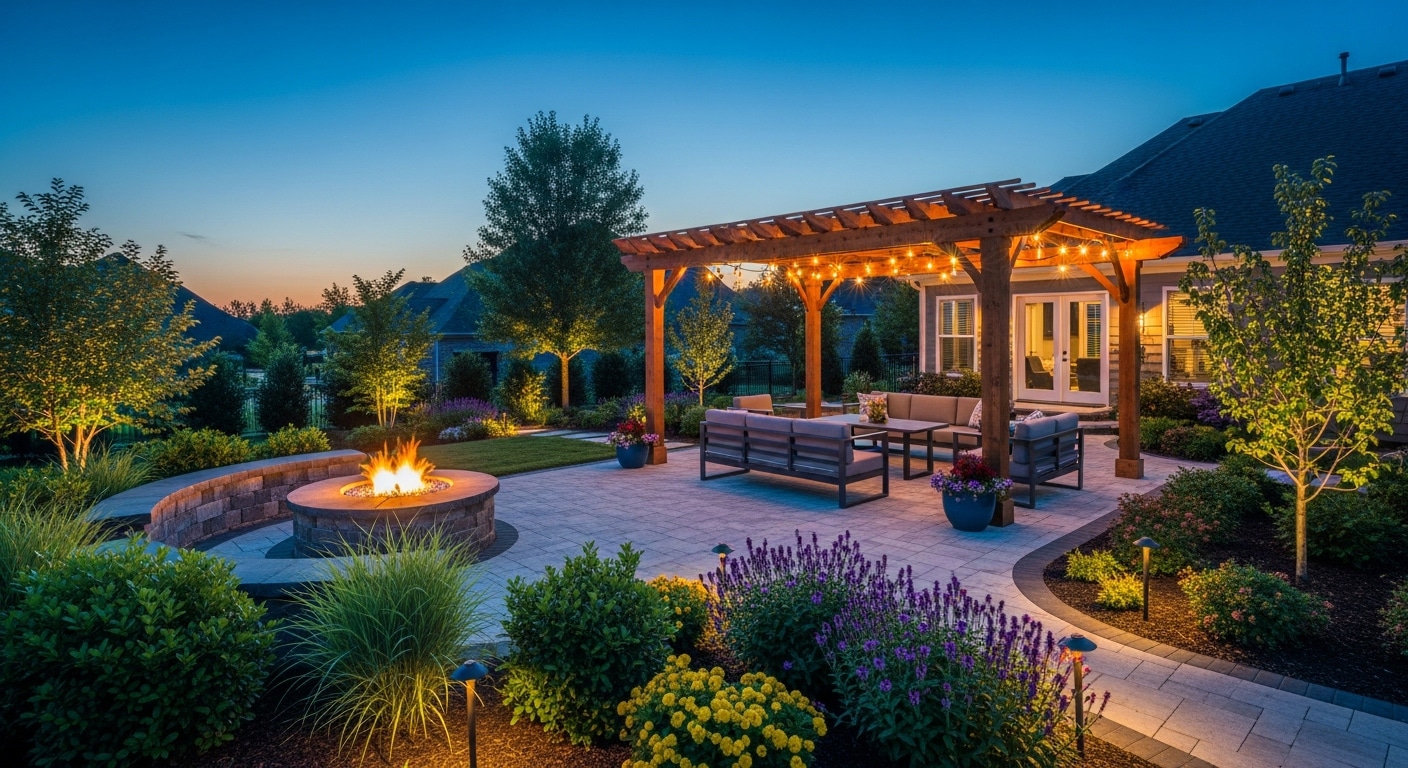
The choice between segmental retaining wall block and natural stone for a retaining wall project in Tulsa affects cost, visual character, engineering requirements, and long-term performance. Both are appropriate materials for retaining walls in Oklahoma’s conditions when properly installed with correct drainage and base preparation. VistaScapes & Design installs retaining walls in both materials and helps homeowners evaluate the trade-offs for their specific project.
Segmental Retaining Wall Block
Segmental retaining wall block systems — manufactured concrete blocks engineered specifically for retaining wall construction — are the most commonly installed retaining wall material in the Tulsa area. Products like Allan Block, Versa-Lok, and similar systems are available through regional distributors, come with published engineering tables that specify wall height limits, geogrid reinforcement requirements, and batter angles, and can be installed efficiently by crews familiar with the product. The consistent dimensions and interlocking geometry of block systems make installation predictable and relatively fast compared to natural stone. The visual result is a clean, uniform wall face that works well in contemporary and traditional residential settings.
Natural Stone Retaining Walls
Natural stone retaining walls — dry-stack or mortared — have a visual character that block systems cannot replicate. Oklahoma limestone, sandstone, and granite boulders create walls that look like they belong in the landscape rather than being manufactured products. Natural stone retaining walls require more hand-fitting per square foot of face area because each stone is unique in dimension and must be fit to adjacent stones without gaps that would compromise the wall’s structural integrity. This additional labor cost is part of the premium for natural stone, along with the material cost of quarried stone versus manufactured block. Dry-stack natural stone walls drain naturally through the stone joints and do not require the same engineered drainage system as mortared walls, which is a meaningful advantage in Oklahoma’s clay soils.
Engineering Data Availability
A practical difference between block and natural stone for projects that require engineering review is the availability of published engineering data. Segmental retaining wall block manufacturers publish detailed design tables stamped by licensed engineers that building departments can rely upon for wall heights within the published specifications. Natural stone retaining walls require site-specific engineering for walls above the permit threshold because there are no manufacturer-published engineering tables — a licensed engineer must evaluate the specific stone dimensions, arrangement, and drainage system and produce stamped drawings for the building department. This adds engineering cost to natural stone walls that require permits.
Cost Comparison
Segmental retaining wall block is generally less expensive per square foot of face area than natural stone retaining walls of equivalent height. The material cost of manufactured block is lower than quarried natural stone, and the installation labor per square foot is lower due to the consistent dimensions of block versus the hand-fitting required for natural stone. For homeowners with a specific budget, block systems provide more wall area for the investment. For homeowners prioritizing visual quality and organic appearance over cost efficiency, natural stone retaining walls justify the premium through their permanence and distinctive character.
Call VistaScapes & Design at (918) 779-1317 for a free retaining wall consultation in Tulsa. We’ll evaluate your site, discuss material options with samples, and deliver a written proposal covering both the wall structure and the drainage system.