Retaining walls are one of the most misunderstood elements in Oklahoma outdoor living projects. Some homeowners see them as purely functional — necessary to hold back a slope, and nothing more. Others want them purely for aesthetics. The best retaining wall projects are both: they solve a real grade or drainage problem while creating usable level space and adding visual structure to a backyard that was previously awkward to use. This guide covers when you need a retaining wall, what materials hold up in Oklahoma, and how VistaScapes integrates them into outdoor living designs.
When Do You Actually Need a Retaining Wall?
A retaining wall is appropriate when: you have a slope that’s losing soil to erosion, you want to create a level patio area on a sloped lot, you need to protect a structure or landscape feature from soil movement, or you want to create defined grade transitions between areas of the property. Oklahoma’s clay soils are particularly prone to movement — they expand when wet and contract when dry, creating erosion patterns and slope instability that worsen over time. A properly built retaining wall with drainage behind it stabilizes these zones and stops the erosion cycle.
You may NOT need a retaining wall when: the slope is gentle enough to grade and seed with groundcover, the grade transition can be handled with a built-up patio foundation rather than a separate wall, or the slope is already stable and vegetated. A contractor who recommends a retaining wall for a gentle two-foot grade change that could be addressed with grading and sod is upselling you. VistaScapes recommends walls when the problem actually requires one, not as a default answer to any slope question.
Retaining Wall Materials for Oklahoma
Concrete Block (Segmental Retaining Wall)
Segmental retaining wall blocks — manufactured concrete blocks with a setback face — are the most commonly used retaining wall material in Oklahoma residential projects. Brands like Allan Block, Versa-Lok, and similar products come in a range of sizes and finishes. They install relatively quickly, handle Oklahoma’s freeze-thaw cycles well when properly drained, and are repairable — if a section fails, individual blocks can be removed and replaced. Segmental wall systems are appropriate for walls up to 4 feet in height without engineering review. Above 4 feet, Oklahoma building codes typically require engineered plans and permits.
Natural Stone Retaining Walls
Dry-stacked natural limestone or sandstone retaining walls are visually superior to concrete block — they have a character and organic quality that manufactured products don’t replicate. In Oklahoma, native limestone is available locally and integrates naturally with the landscape. Dry-stacked stone walls rely on mass and friction rather than mortar — they flex slightly with soil movement and drain naturally. For walls under 3 feet in residential settings, dry-stacked natural stone is a beautiful and durable option. Taller natural stone walls require more careful construction and often mortar or a concrete footing system to maintain structural integrity.
Poured Concrete and Masonry Walls
Engineered poured concrete retaining walls are used for taller grade changes that exceed what segmental block or natural stone can handle safely. These walls require permits and engineering sign-off in Oklahoma for heights above 4 feet. The advantage of poured concrete is load capacity — a properly engineered poured wall can retain significantly more soil pressure than stacked systems. They’re typically finished with stone veneer, stucco, or exposed aggregate to improve aesthetics. For major grade changes associated with outdoor kitchen or patio projects on significantly sloped lots, engineered concrete walls are sometimes the only structurally appropriate option.
Drainage Behind Retaining Walls — Non-Negotiable in Oklahoma
The most common retaining wall failure in Oklahoma is drainage failure. When water saturates the soil behind a retaining wall, the hydrostatic pressure against the wall increases dramatically — eventually pushing it over or causing it to bulge. Oklahoma’s heavy spring and summer thunderstorms — 2–4 inch rainfall events are common — create intense short-duration water loads behind walls that lack proper drainage.
Every retaining wall VistaScapes builds includes a gravel drainage aggregate backfill and a perforated pipe drain at the base — a french drain system that routes water out from behind the wall before pressure builds. This is not optional engineering. It’s the difference between a wall that lasts 25 years and one that fails in year three after a wet spring. Ask any contractor you consider how they handle drainage behind the wall. If the answer is “we just backfill with the native soil,” find a different contractor.
Retaining Walls as Outdoor Living Features
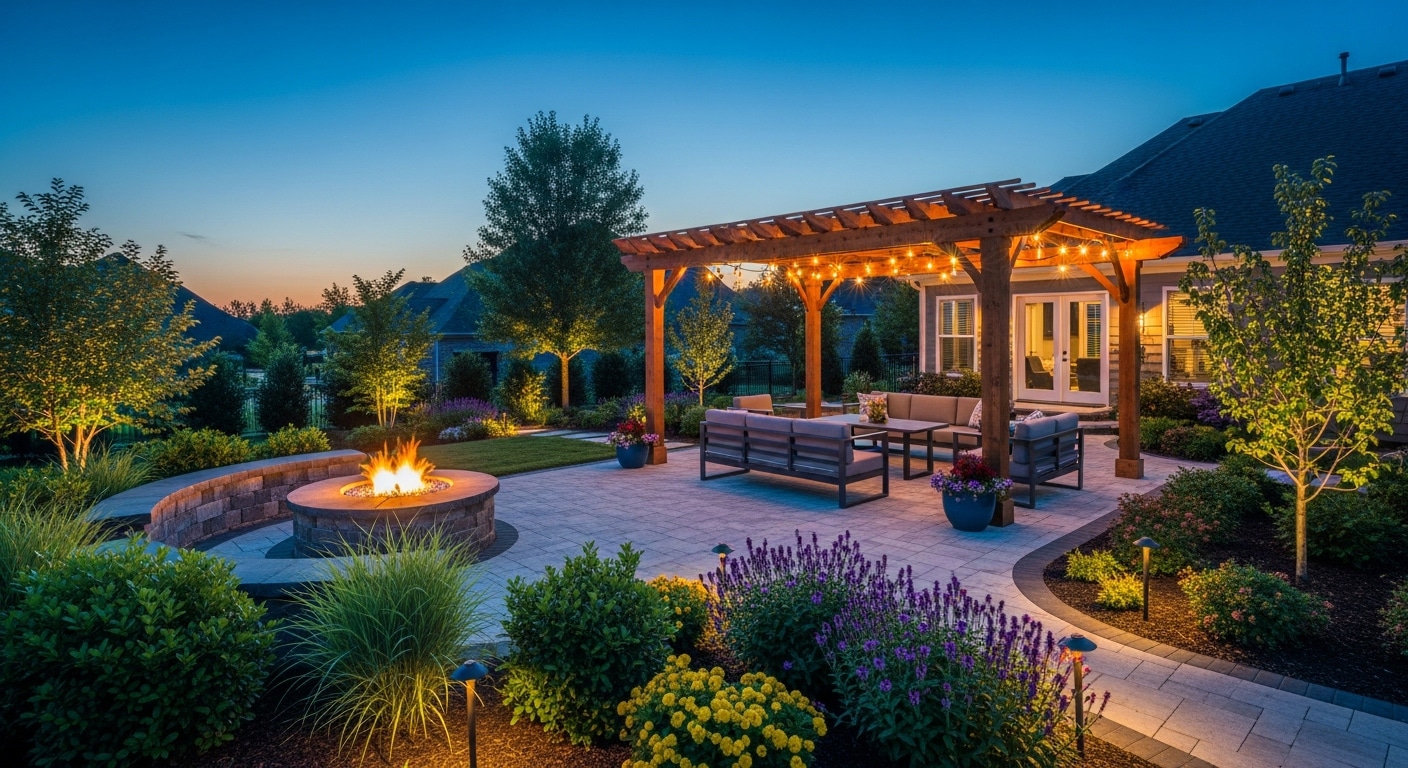
The best retaining wall projects solve the grade problem while creating something beautiful. Tiered retaining walls with planting beds between levels transform a steep, unusable backyard slope into a designed landscape. A retaining wall that creates a level upper patio and retains a lower lawn area doubles as a seating edge — a built-in bench at wall-top height is a natural integration. Lit retaining walls — with low-voltage in-ground lighting at the wall base — are dramatic at night and practical for safety on grade transitions. VistaScapes designs retaining walls as landscape architecture elements, not just structural necessities.
Frequently Asked Questions
Dealing with a slope on your Broken Arrow or Tulsa property? Contact VistaScapes to schedule a free site visit. We’ll assess your grade situation honestly and recommend a solution — retaining wall or otherwise — that actually fits the problem.