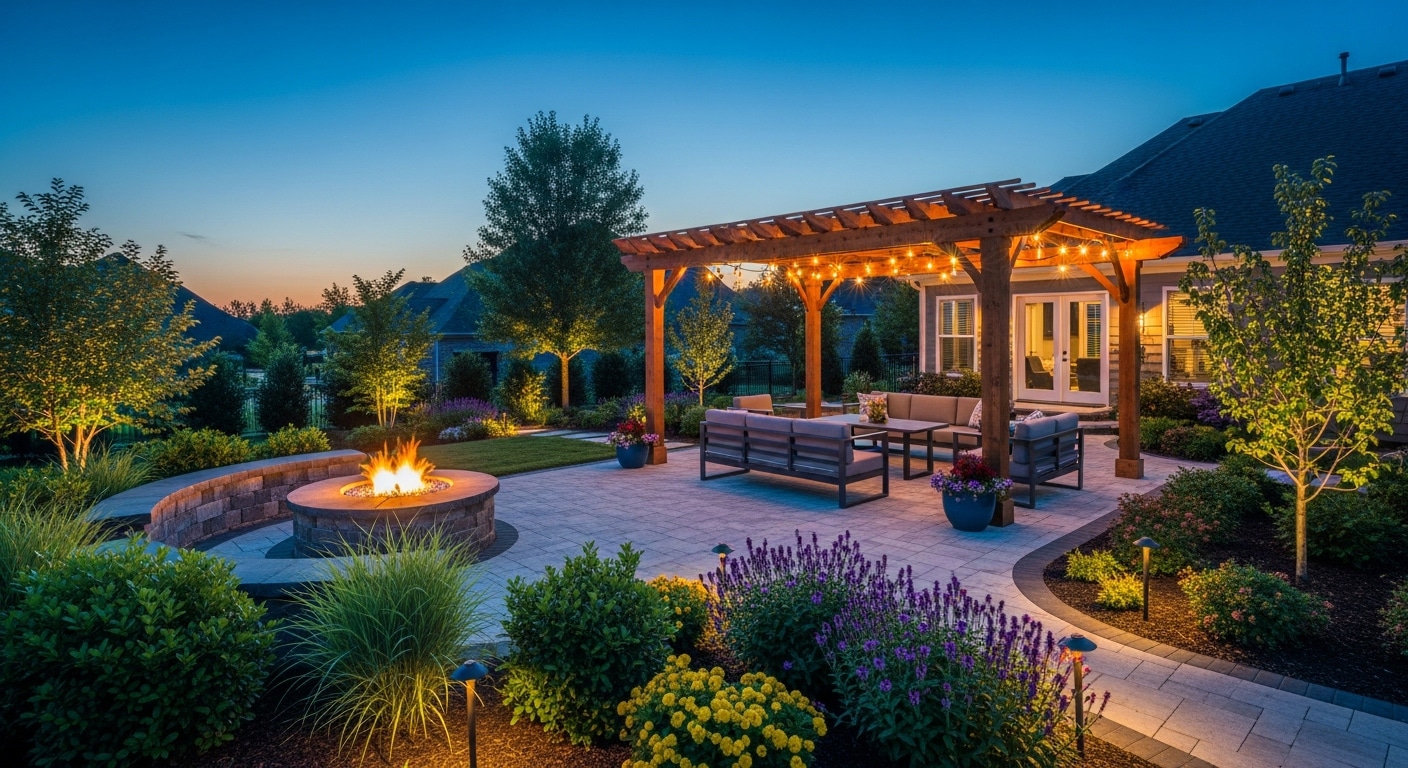
An insulated roof panel system for a Broken Arrow or Tulsa covered patio — a structural insulated panel (SIP) or insulated metal panel system used as the covered patio’s roof deck rather than conventional framed roof decking — is an increasingly popular upgrade for homeowners who want their covered patio outdoor kitchen to function comfortably in Oklahoma’s most extreme temperature conditions. A standard covered patio roof with asphalt shingles over plywood sheathing provides no meaningful thermal insulation — the space under the covered patio in July can reach 95 to 105°F even in the shade because the uninsulated roof deck radiates solar heat downward. An insulated roof system significantly reduces this radiant heat load, making the covered patio usable in afternoon summer heat rather than only in the morning or evening. VistaScapes & Design specifies insulated roof panel systems on covered patio projects for Broken Arrow homeowners who specifically prioritize summer comfort and extended usability in Oklahoma’s heat.
Insulated Panel Types and R-Values
Two types of insulated roof panel systems are used in residential covered patio applications in the Broken Arrow market: structural insulated panels (SIPs — panels consisting of a rigid foam core [EPS or polyisocyanurate] bonded between two structural facing panels [OSB, plywood, or metal] that serve as both the structural roof deck and the insulation layer, eliminating the need for conventional framing rafters); and insulated metal panels (IMP — factory-formed steel or aluminum panels with a foam insulation core, commonly used in commercial construction and increasingly available for residential covered patio applications). SIP panels are available in R-15 to R-38 insulation values (thicker panels = higher R-value); insulated metal panels typically provide R-16 to R-30. For an Oklahoma climate application where the primary benefit is reducing summer radiant heat, an R-19 to R-25 panel provides the most practical balance of comfort improvement and cost — the marginal benefit of R-38 versus R-25 is small in a structure that is not climate-controlled. An insulated roof system on a 400 square foot covered patio adds $4,000 to $9,000 to the roof structure cost over conventional roof framing with standard decking, depending on panel type and R-value specification.
Complementary Comfort Additions
An insulated roof panel is most effective when combined with other thermal comfort additions that address the remaining heat sources in the covered patio environment: a ceiling fan (moves air across guests and the cook, reducing the perceived temperature by 3 to 5°F in Oklahoma’s dry summer heat — a well-designed covered patio uses one ceiling fan per 80 to 100 square feet of covered area); outdoor misting fans or a misting system (fine water mist evaporation reduces the air temperature by 10 to 15°F in low-humidity conditions — Oklahoma’s summer afternoons often have sufficient dryness for misting effectiveness); and a patio heater for fall and winter use (the insulated roof that reduces summer heat gain also retains heat from a patio heater or fire feature in cooler months, extending the usable outdoor season further). The combination of an insulated roof, a ceiling fan, and a misting system creates a covered patio that is genuinely comfortable in afternoon summer conditions in Broken Arrow — not just in the shaded morning hours. VistaScapes & Design can incorporate all three comfort elements into the covered patio design and rough-in the necessary electrical connections during construction.
Call VistaScapes & Design at (918) 779-1317 for a free covered patio consultation in Tulsa. We’ll explain the insulated panel options and design a covered patio that stays comfortable in Oklahoma’s full range of outdoor conditions.