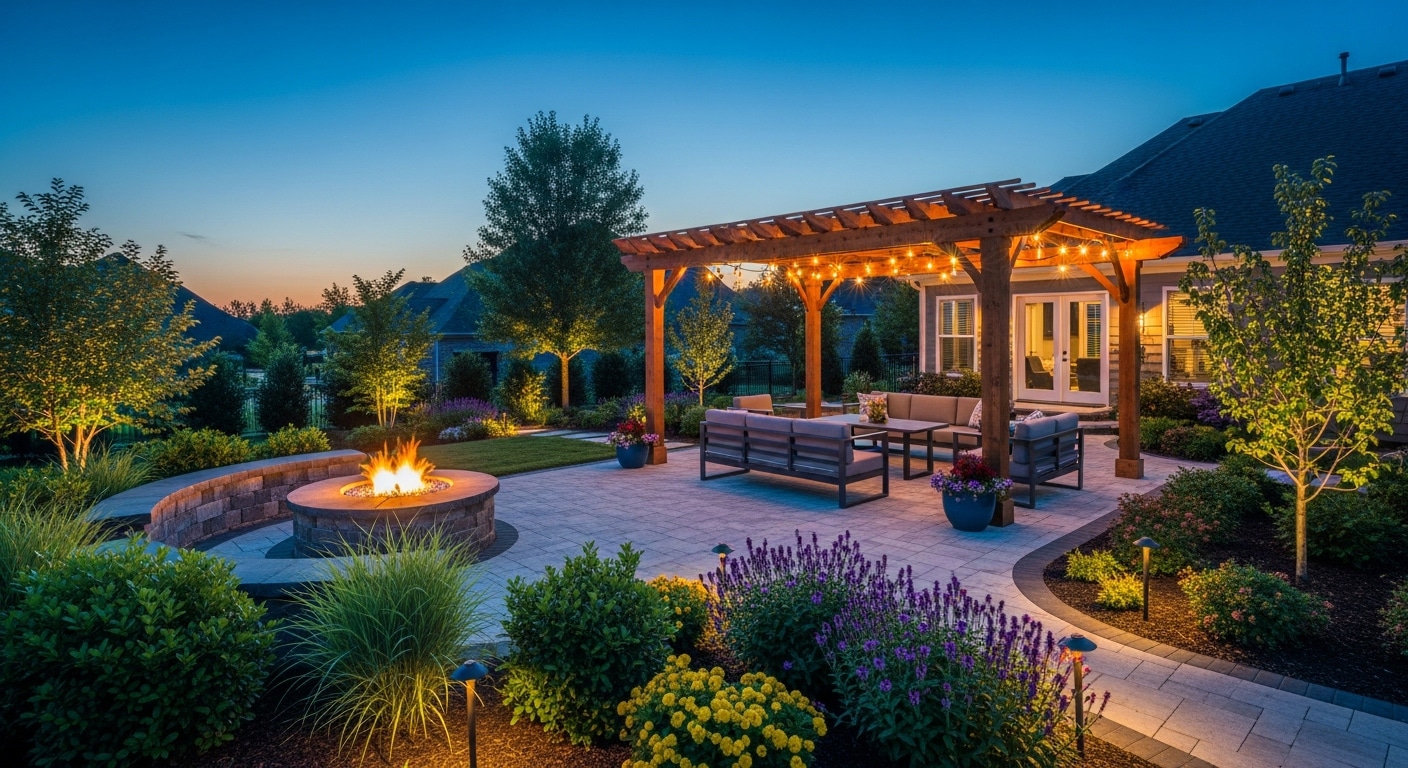
Privacy screening is a common covered patio design element for Tulsa homeowners whose back yards have close neighbors, overlooking second-floor windows, or rear-facing lots that feel exposed during outdoor entertaining. VistaScapes & Design integrates privacy solutions into covered patio designs throughout Tulsa — from masonry privacy walls built as part of the covered patio structure to lattice panels, cedar screens, and landscaping that create privacy without enclosing the outdoor space completely.
Masonry Privacy Walls
A masonry privacy wall — a concrete block wall with stone or stucco veneer matching the outdoor kitchen base — built as part of the covered patio structure provides the most permanent, low-maintenance, and visually cohesive privacy solution. Positioned on the side of the covered patio that faces the privacy issue (typically a neighbor’s property or an elevated vantage point), a masonry privacy wall of 6 to 8 feet creates a solid visual barrier that becomes part of the covered patio’s architectural character rather than an add-on screening solution. The masonry wall can incorporate built-in shelving, lighting niches, or a stacked stone feature that adds design interest while serving its privacy function. This is the most expensive privacy option but the most durable and the most integrated with the overall outdoor kitchen and covered patio aesthetic.
Lattice and Cedar Panel Screens
Cedar lattice or solid cedar panel screens mounted to the covered patio’s structural posts provide a warmer, more natural visual character than masonry walls at a lower cost. Cedar is naturally rot-resistant and handles Oklahoma’s outdoor exposure reasonably well when properly finished and maintained — annual recoating with a penetrating wood sealer extends the life of cedar panels significantly in Oklahoma’s UV and moisture environment. Lattice panels provide partial privacy — they filter the view without blocking it completely — and allow air movement through the covered patio. Solid cedar board panels or board-and-batten screening provide complete visual privacy but create a more enclosed feeling and reduce airflow more significantly. We discuss the appropriate privacy screening approach based on the specific privacy need and the homeowner’s preference for the enclosed-vs-open feeling of the covered patio space.
Landscaping as Privacy Screening
Evergreen trees and shrubs — Eastern red cedar, Nellie R. Stevens holly, Leyland cypress — planted along the property boundary can provide effective privacy screening when established, with the added benefit of a living, natural visual buffer rather than a constructed screening element. The limitations: establishment time (1 to 3 years for meaningful screening from newly planted specimens), space requirement (evergreen privacy hedges need 6 to 10 feet of width to develop effective screening density), and maintenance (watering, occasional trimming). For homeowners with a longer time horizon and the space for planted screening, native evergreen plantings integrated with the covered patio landscape plan create privacy that matures with the outdoor living environment rather than needing structural replacement over time.
Call VistaScapes & Design at (918) 779-1317 for a free covered patio consultation in Tulsa. We’ll design privacy screening that fits your outdoor living environment, your property layout, and your preference for permanence and maintenance commitment.