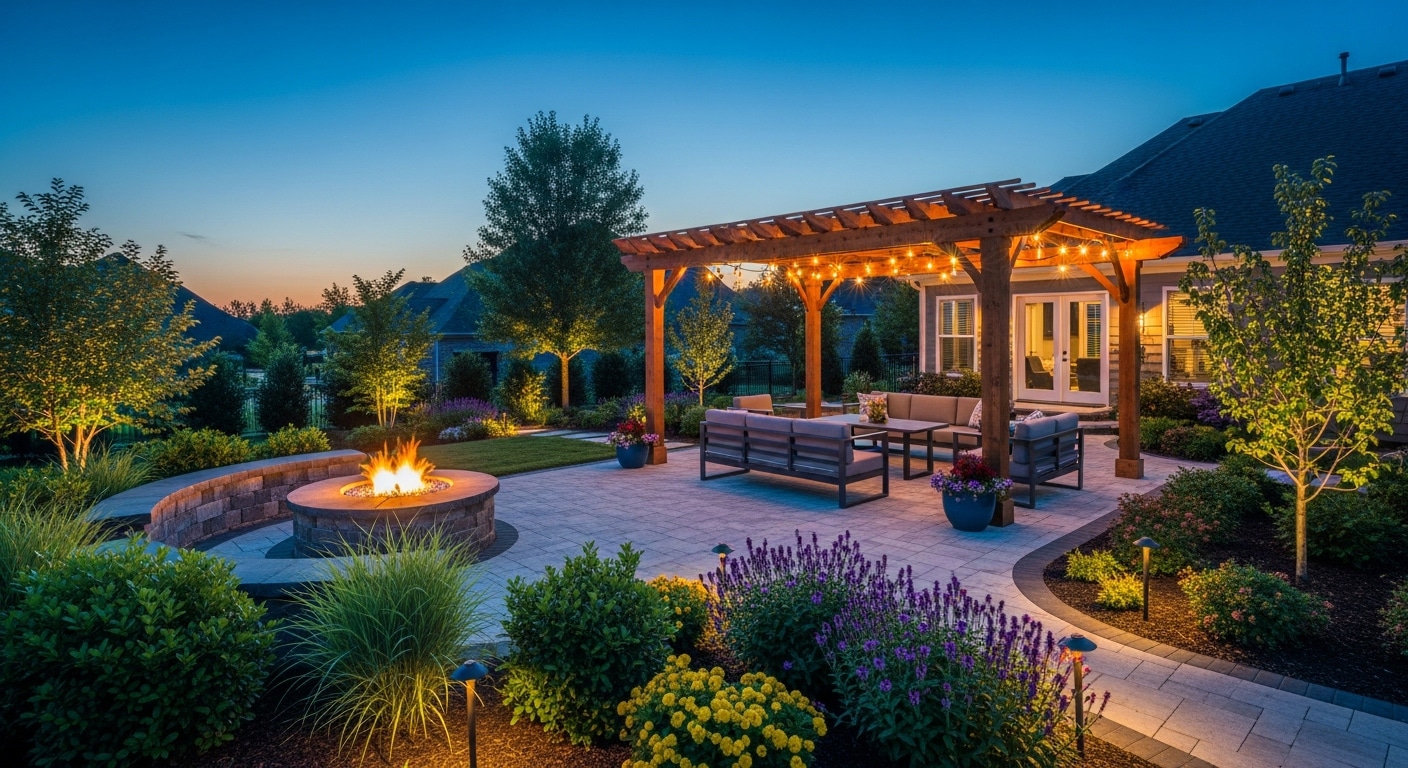
The roof pitch of a Broken Arrow or Tulsa covered patio — the angle of the roof surface expressed as the number of inches of vertical rise per 12 inches of horizontal run (e.g., 4/12 pitch = 4 inches of rise for every 12 inches of run) — affects the covered patio’s visual proportion, its headroom at the eave line, the drainage performance during Oklahoma’s heavy spring rain events, and its compatibility with the home’s existing roofline. Choosing the right pitch for a covered patio in Broken Arrow requires balancing the aesthetic goal (a steep pitch looks more substantial and residential; a shallow pitch reads as more contemporary and open) against the practical constraints of the connection to the home and the post height at the patio’s perimeter. VistaScapes & Design selects covered patio roof pitch on every Broken Arrow project to optimize visual proportion and drainage performance for Oklahoma’s rainfall patterns.
Minimum Pitch for Drainage in Oklahoma
Oklahoma’s rainfall intensity creates a minimum roof pitch requirement for functional covered patio drainage: intense spring thunderstorm events in the Broken Arrow area (2 to 4 inches of rain per hour during severe storm cells are not uncommon) require adequate roof pitch to shed water quickly enough that the roof edge drains faster than rain accumulates on the surface. The minimum functional roof pitch for a covered patio in Broken Arrow using asphalt shingles is 3/12 (3 inches of rise per 12 inches of run) — below 3/12, asphalt shingles are not rated by manufacturers for reliable water-shedding performance in heavy rain. A 4/12 pitch is the most common specification in the Broken Arrow covered patio market: it provides reliable drainage with standard roofing materials, produces adequate headroom at the eave line for a standard 10-foot post height, and creates a visual proportion that reads as residential rather than flat-commercial. Steeper pitches (6/12, 8/12, 10/12) are used in covered patio designs that are intended to match a steeply pitched home roofline or to create a more prominent architectural presence — a 10/12 pitch covered patio over an outdoor kitchen creates an almost cathedral-like covered environment with high apex and dramatic roofline that suits large-scale outdoor entertaining spaces. Low-slope covered patios (2/12 or less) require a metal roof or TPO membrane rather than asphalt shingles — metal roofing is watertight at low slopes and is increasingly popular in the Broken Arrow outdoor kitchen market for its 40 to 50-year service life and Class 4 hail impact rating. A standing-seam metal roof on a 2/12 pitch covered patio creates a clean, contemporary visual profile that suits modern architectural styles and eliminates re-roofing maintenance for the covered patio’s lifetime.
Headroom, Proportion, and Attachment Constraints
The roof pitch interacts with the post height and the attachment point at the home’s ledger board to determine the covered patio’s clear headroom at the eave and the visual proportion of the roof above the outdoor kitchen. For a covered patio attached to the home’s second-floor band or first-floor eave: the patio’s roof pitch is constrained by the height of the attachment point (the ledger board mounted to the home’s exterior) and the desired clear headroom at the patio’s perimeter posts. A standard attached covered patio in Broken Arrow with posts at 10 feet to the top of post, attached at 11 feet at the ledger, and spanning 14 feet in depth would have a roof pitch of approximately 1/12 — too shallow for asphalt shingles and requiring a metal roof for drainage performance. To achieve a steeper pitch on a deeply projecting covered patio without raising the ledger height, VistaScapes & Design sometimes uses a shed-to-gable roof form: the patio roof transitions from a shed (single slope) at the attachment point to a gable form at the perimeter, allowing the peak height to be raised independently of the ledger attachment point. The covered patio roof pitch should also be evaluated against Oklahoma’s prevailing wind patterns: steep pitched roofs in open backyard positions are more susceptible to wind uplift forces during Oklahoma’s tornado-warned weather events — the covered patio’s structural connections (ledger bolts, post anchors, rafter ties) must be designed for Oklahoma’s wind speed requirements under the adopted building code.
Call VistaScapes & Design at (918) 779-1317 for a free covered patio consultation in Tulsa. We’ll design the right roof pitch and structural system for your outdoor kitchen and covered patio to perform in Oklahoma’s full range of weather conditions.