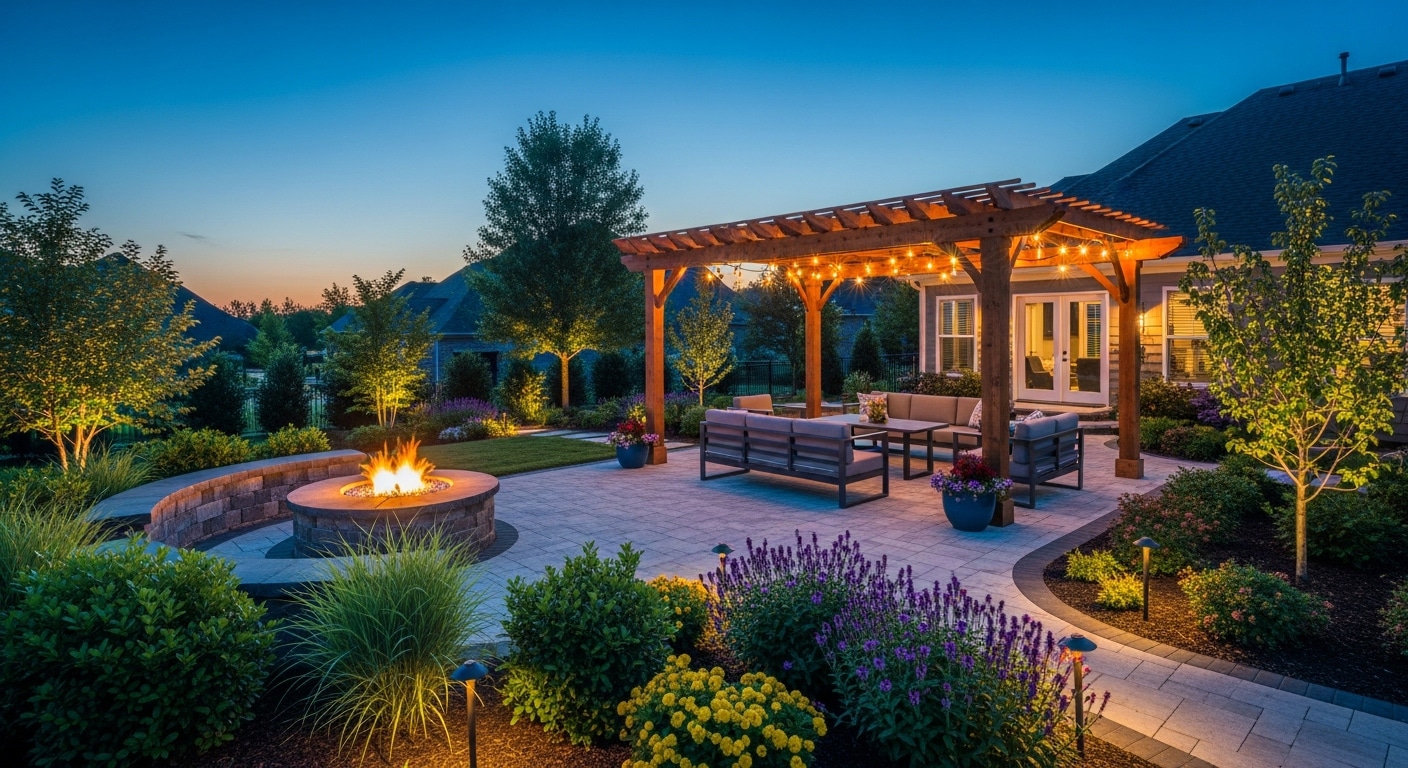
The roof pitch of a covered patio — the steepness of the roof expressed as the rise-to-run ratio — affects the covered patio’s drainage performance, interior height clearance at the posts and eave, visual proportion, and the performance of insulated panel roofing systems in Oklahoma’s climate. A covered patio with a roof pitch that is too shallow drains poorly in Oklahoma’s heavy rain events, accumulates standing water that accelerates panel and fastener deterioration, and may not achieve the minimum slope required by the insulated panel manufacturer’s installation specifications. A roof pitch that is too steep produces a visually awkward covered structure that appears disproportionately tall for the span it covers. VistaScapes & Design designs roof pitch into every covered patio project in Broken Arrow and Tulsa based on the structure’s span, the attached home’s roofline, and the aesthetic direction of the outdoor living design.
Standard Pitch Ranges for Covered Patios
The practical roof pitch range for residential covered patios in Tulsa is 2:12 to 6:12 — a rise of 2 to 6 inches per 12 inches of horizontal run. For insulated roof panel systems (the most common roofing material for covered patio structures in the Tulsa metro), the minimum allowable slope is typically 1:12 per the panel manufacturer’s installation specifications; most projects specify 2:12 to 3:12 as the minimum to ensure positive drainage in all conditions. A 4:12 to 6:12 pitch produces better drainage performance and a more residential roof proportion — the covered patio reads as a scaled-down extension of the home’s roof rather than as a flat commercial canopy — but adds height to the structure that may require taller posts and a higher attachment point on the home’s exterior wall. For attached covered patios that connect to a single-story home’s back wall near the soffit line, a 3:12 to 4:12 pitch typically achieves the right balance between adequate drainage slope and a header attachment height that maintains reasonable interior clearance under the covered structure.
Gable vs Shed Roof and Pitch
A gable covered patio roof — with a ridge running down the center of the structure and two sloping sides draining in opposite directions — can achieve a symmetrical visual proportion at a lower pitch than a shed roof (a single-slope roof that drains in one direction) because the ridge height is centered over the structure rather than at one edge. A shed roof covered patio attached to a home’s back wall drains away from the house and toward the yard — the pitch must be steep enough to drain adequately but not so steep that the high end of the shed roof (at the attachment point on the house wall) rises into the home’s roofline or fascia. For most attached shed-roof covered patio projects in Broken Arrow and Tulsa, we target a 3:12 to 4:12 pitch that produces a covered patio ridge attachment height approximately 18 to 24 inches above the home’s soffit line — enough clearance to attach properly without conflicting with the existing roof structure.
Call VistaScapes & Design at (918) 779-1317 for a free covered patio consultation in Tulsa. We’ll design the right roof pitch and configuration for your specific home’s roofline and outdoor kitchen layout.