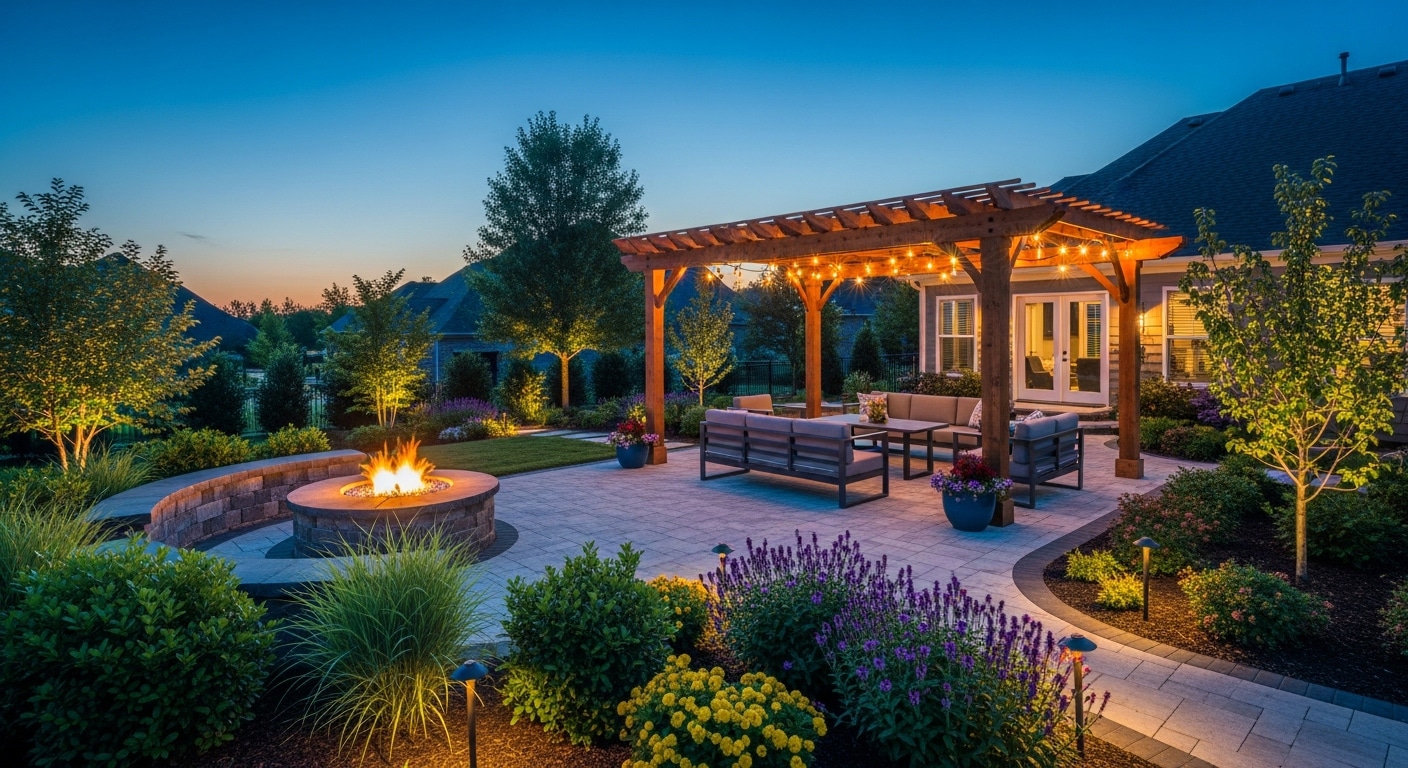
Adding a screen enclosure to a Broken Arrow covered patio transforms the outdoor space from an open-air structure into a semi-enclosed outdoor room that provides protection from insects, wind-driven debris, and light rain while maintaining the open, airy character of an outdoor environment. Screen enclosures are a meaningful upgrade for Broken Arrow homeowners who want to maximize the usable hours of their covered patio and outdoor kitchen, particularly during Oklahoma’s spring and early summer months when evening insects are active and during fall evenings when light breezes carry leaves and debris onto the patio. VistaScapes & Design discusses screen enclosure options for Broken Arrow covered patio projects where the homeowner wants to add weather and insect protection to the outdoor living space.
Motorized Retractable Screen Systems
Motorized retractable screen systems for Broken Arrow covered patios: motorized retractable screens (Phantom Screens, Mirage Screens, ScreenFlex, Lifestyle Screens) roll up into a housing box mounted at the top of the covered patio’s open bay and lower on a guide track system when activated; motorized retractable screens provide the flexibility of an open patio when the screen is retracted and a screened enclosure when it is deployed; the screen is operated by a wall-mounted switch, a wireless remote control, or a smartphone app; motorized screens are appropriate for Broken Arrow covered patios where the homeowner wants the option of opening or closing the screen depending on conditions. Screen material options for motorized retractable systems: standard solar screen fabric (14×18 mesh per inch) provides insect protection and reduces glare and sun exposure; charcoal-colored screen fabric produces the best outward visibility; light-colored fabrics (gray, beige) produce more glare; heavy-duty screen fabric (17×20 mesh) provides improved tear resistance for high-traffic bays; clear vinyl screen panels provide near-complete weather protection and allow year-round use in Oklahoma’s mild winter months with supplemental heating; the clear vinyl panels allow rain and wind protection while maintaining the view from inside the screen enclosure. Motorized screen housing options: the screen housing (head box) mounts to the underside of the covered patio’s beam or ledger and can be surface-mounted (visible on the beam’s face) or recessed into a pocket framed into the beam or ceiling; recessed screen housing produces a cleaner appearance when the screen is retracted but requires the pocket framing to be incorporated into the covered patio’s original construction; surface-mounted housing is the standard installation for existing covered patios. Motorized screen cost: a single motorized screen panel for a 12-foot to 16-foot covered patio bay typically costs $1,800 to $3,500 installed, depending on the screen width, the fabric type, and whether the control is manual (spring-loaded cord pull) or motorized (electric motor with remote); a complete screen enclosure for a 16 by 24-foot covered patio with three open sides typically requires 3 to 4 screen panels at $5,400 to $14,000 installed.
Fixed Screen Panels and Track Systems
Fixed screen panels and track systems for Broken Arrow covered patios: fixed screen enclosure systems — a fixed screen enclosure uses aluminum-framed screen panels installed in a post-and-track system that creates a permanent screened wall between the covered patio’s structural posts; the screen panels can be designed as swing-door panels (that open like standard screen doors), sliding panels (that slide along a track for full-width access), or fixed non-opening panels; a fixed screen enclosure is typically less expensive than a motorized retractable system and produces a more traditional screened-porch appearance. Aluminum framing systems for fixed screens: aluminum framing systems (available from screen enclosure specialists or home improvement suppliers) use extruded aluminum members (typically 1×2-inch or 1.5×1.5-inch aluminum profiles) to frame the screen panels; the aluminum frames are anchored to the covered patio’s structural posts at the top and bottom with track channels that hold the screen fabric in tension; the screen fabric is splined (held in a groove by a rubber spline cord) or stretched taut within the aluminum frame; aluminum frames are available in painted or anodized finishes in white, bronze, and brown that coordinate with the covered patio’s trim colors. Track-and-screen panel systems for corners and angles: a covered patio with a non-rectangular shape (L-shape, angled corner, or irregular plan) can be screened using custom-cut screen panels that fill each bay; corner connections use mitered or butt-joined aluminum frames that carry the screen panel around the corner; diagonal and angled screen panels require custom fabrication that adds to the installation cost. Screen enclosure permitting: a fixed screen enclosure that changes the covered patio’s classification from open to enclosed may trigger a permit amendment or a new permit in the City of Broken Arrow, depending on the enclosure’s configuration and whether the enclosure is attached to the home’s existing structure; contact the City of Broken Arrow Building Department before installing a fixed screen enclosure to confirm whether a permit is required. VistaScapes & Design recommends rough-in blocking and clearances for screen enclosure systems during the covered patio’s original framing phase to simplify the addition of a screen enclosure during or after construction.
Call VistaScapes & Design at (918) 779-1317 for a free covered patio consultation in Tulsa. We’ll discuss screen enclosure options for your covered patio and help you plan the rough-in clearances needed for a future screen installation.