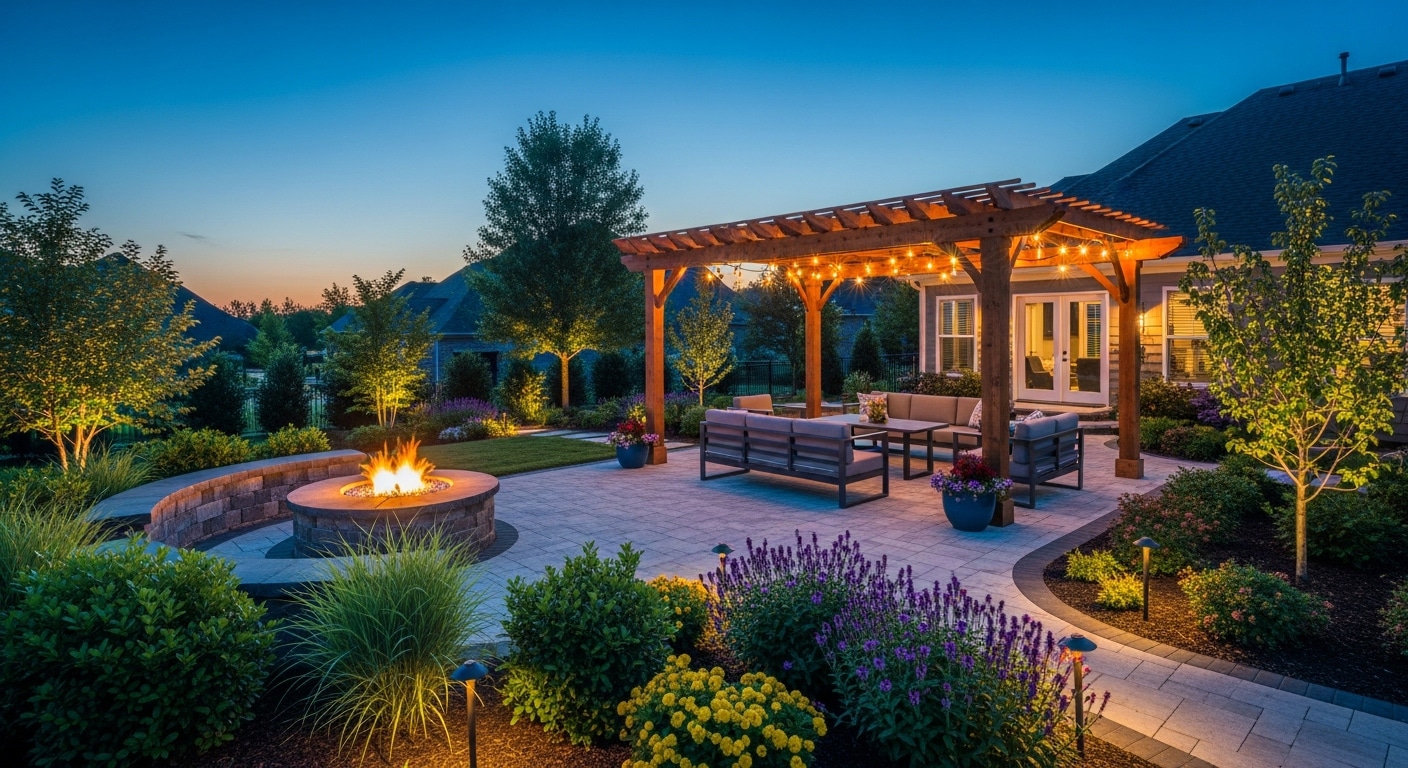
The ceiling finish in a Broken Arrow covered patio transforms the outdoor structure from an open framing assembly into a finished outdoor room — and the material, pattern, and finish of the ceiling system has a larger visual impact on the covered patio’s character than almost any other finish element. A wood ceiling applied to the underside of the covered patio’s roof framing introduces warmth, texture, and architectural depth that distinguishes the outdoor living space from a simple awning structure. Understanding the wood species, finishing, and installation options for Broken Arrow covered patio ceilings helps homeowners specify a ceiling system that performs in Oklahoma’s outdoor conditions and achieves the aesthetic direction they want for the outdoor kitchen and covered patio.
Wood Species for Outdoor Ceilings
Wood species selection for Broken Arrow covered patio ceilings: western red cedar — the most popular wood species for outdoor ceiling applications in the Broken Arrow covered patio market; cedar’s natural oils provide inherent resistance to rot, insect damage, and moisture absorption that extends the wood’s outdoor lifespan without chemical preservative treatment; cedar’s low shrinkage coefficient (the rate at which it expands and contracts with moisture change) produces a dimensionally stable ceiling that gaps minimally between boards during Oklahoma’s dry winter months; cedar is available in tongue-and-groove profile boards (where the tongue of one board fits into the groove of the adjacent board to create a continuous interlocking face), beadboard profile (a rounded bead detail routed into the board face), or shiplap profile (an offset rabbet that allows boards to overlap slightly); western red cedar for outdoor ceiling applications is available in clear grades (no knots) and knotty grades — knotty cedar with closed knots is appropriate for a rustic outdoor kitchen aesthetic; clear cedar is appropriate for a contemporary or traditional refined aesthetic. Douglas fir: a harder and denser wood than cedar, Douglas fir is used for covered patio ceilings in applications where the homeowner wants a more formal or traditional wood grain appearance than cedar provides; fir’s tighter grain produces a smoother finished surface that stains more uniformly than cedar’s open grain; fir is more susceptible to moisture damage than cedar and requires a penetrating oil stain or solid color stain sealant to protect the wood surface from Broken Arrow’s outdoor moisture cycling. Pine (southern yellow pine, eastern white pine): pine is available at lower cost than cedar but requires more maintenance — pine’s open grain absorbs moisture readily, and an unsealed pine ceiling in a covered patio will gray, check (develop small surface cracks), and begin to deteriorate within 2 to 3 years of installation in Broken Arrow’s outdoor conditions; pine ceilings in covered patio applications require a quality exterior primer and top coat (solid color or semi-transparent stain) applied at installation and refreshed every 2 to 3 years. Thermally modified wood: a newer category of wood products where the wood is heat-treated in an oxygen-free kiln to permanently alter the wood’s cellular structure, reducing moisture absorption, decay susceptibility, and dimensional movement; thermally modified wood (Kebony, Accoya, Thermowood) is more stable than untreated cedar in outdoor applications and has a natural brownish-gray color that weathers gracefully without requiring finish maintenance; thermally modified wood is appropriate for contemporary outdoor kitchen covered patio applications where low maintenance is a priority.
Installation and Finishing
Wood ceiling installation and finishing for Broken Arrow covered patios: tongue-and-groove installation — T&G ceiling boards are installed perpendicular or diagonal to the covered patio’s rafters or purlins; the boards are blind-nailed (nails driven through the tongue at 45 degrees and hidden by the next board’s groove) or face-nailed (nails driven through the board face and set with a nail set); blind-nailing is the standard for cedar T&G ceilings where nail visibility would detract from the aesthetic; face-nailing with stainless steel ring-shank nails is used for heavier boards or when a more rustic appearance is acceptable. Fastener selection: all fasteners in a Broken Arrow outdoor wood ceiling must be stainless steel (AISI 316 or AISI 304) or hot-dipped galvanized steel to prevent rust streaking on the wood surface; electroplated or zinc-coated fasteners rust within one to two years in outdoor conditions and produce unsightly rust staining on cedar and pine surfaces. Ventilation gap: cedar and pine tongue-and-groove ceiling boards installed without a ventilation gap above the boards will trap moisture between the boards and the roof sheathing above, accelerating deterioration of both the ceiling boards and the sheathing; for covered patios with an enclosed ceiling space above the T&G boards, a ventilation path (soffit vents at the patio perimeter and ridge vents at the peak) must be provided to allow moisture-laden air to escape. Finish options for outdoor wood ceilings in Broken Arrow: penetrating oil stains (DEFY Hardwood Stain, TWP 100 series, Penofin Hardwoods) penetrate the wood surface rather than forming a film and allow the wood to breathe; penetrating stains do not peel or blister and require reapplication every 2 to 4 years; semi-transparent or solid color exterior alkyd or oil-based stains provide more color options and longer maintenance intervals but form a surface film that can peel if the wood moves excessively or if the film is applied over existing finish without proper surface preparation. Clear finishes: exterior spar varnish or exterior polyurethane applied over cedar or fir produces a rich, high-gloss appearance but requires sanding and reapplication every 1 to 2 years in Broken Arrow’s outdoor UV conditions — UV degrades clear film finishes faster than pigmented finishes. VistaScapes & Design specifies cedar T&G ceilings as the standard wood ceiling option for Broken Arrow covered patio outdoor kitchen projects and discusses the finish options and maintenance schedule at every project consultation.
Call VistaScapes & Design at (918) 779-1317 for a free covered patio and outdoor kitchen consultation in Tulsa. We’ll design the ceiling system for your covered patio and specify the wood species and finish that matches your design direction.