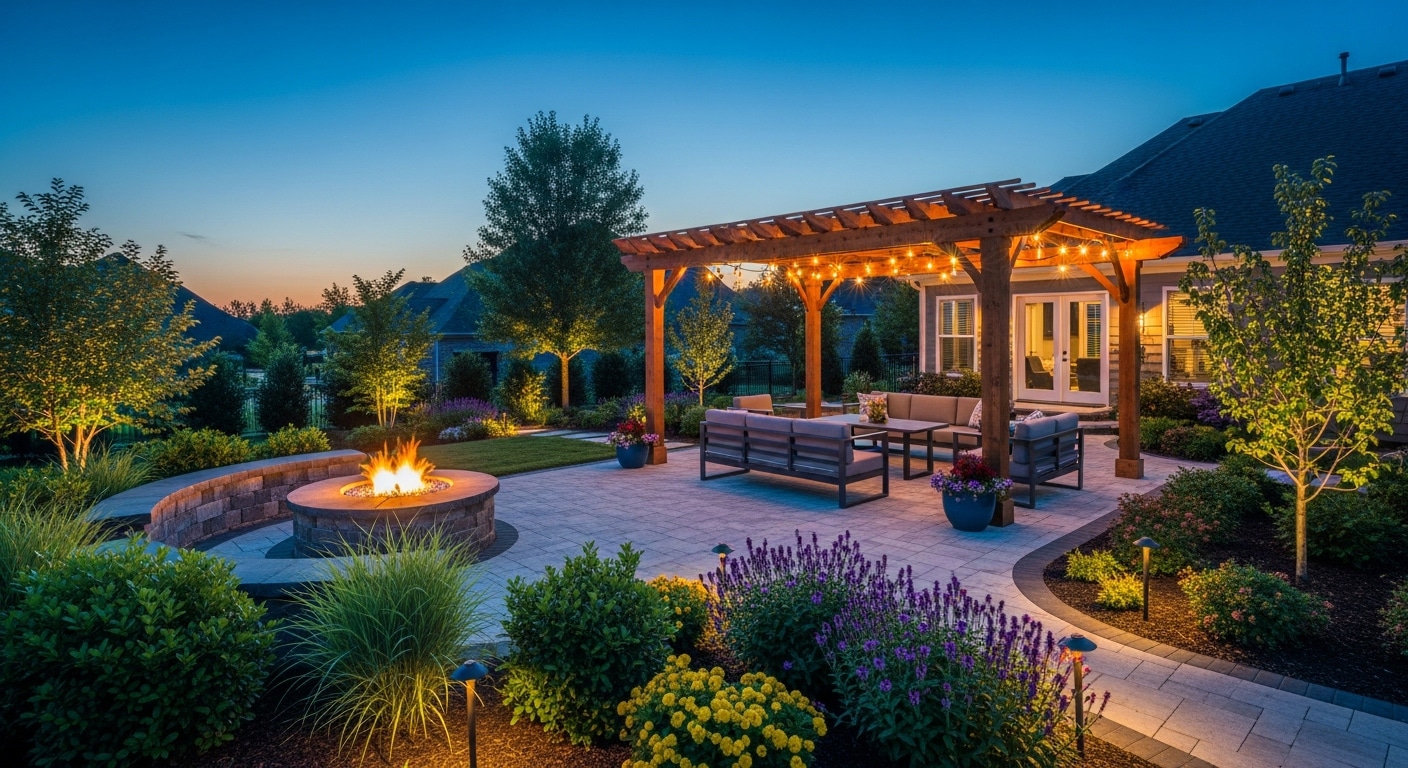
Many Broken Arrow residential lots present grade changes between the home’s back door and the primary outdoor living zone — a slope, a step-down from the house elevation to the yard level, or a significant grade change across the backyard that requires grading before a level patio can be constructed. The retaining wall that manages this grade change is not simply a functional structural element; it is one of the most visible masonry surfaces in the outdoor living environment, and its design — the material, coping style, and integration with the outdoor kitchen’s veneer and countertop — determines whether the outdoor kitchen and patio read as a cohesive designed space or as a patio with a retaining wall added as an afterthought. VistaScapes & Design designs retaining walls as integrated elements of the outdoor kitchen and covered patio project when a grade change is present, using the same veneer materials and design language as the outdoor kitchen base.
Retaining Wall Structural Design
Retaining wall structural design for Broken Arrow outdoor kitchen projects: the retaining wall’s structural requirements depend on the wall height, the soil type behind the wall, and whether the wall is supporting additional load (a patio slab, a driveway, or a structure) above the retained grade. Low retaining walls (under 4 feet tall) in Broken Arrow residential applications are commonly built from concrete masonry unit (CMU block) with steel reinforcing rebar set in the block cores and filled with concrete grout — the same CMU construction used for the outdoor kitchen base; a CMU retaining wall 4 feet tall or less typically does not require an engineered structural design in Broken Arrow and can be built by an experienced masonry contractor without a structural engineer’s stamp; the CMU wall is then veneered with the same stone, stucco, or brick material used on the outdoor kitchen base, creating visual continuity between the two masonry structures. Retaining walls over 4 feet tall in Broken Arrow require a structural engineer’s review and design in most cases — the wall must be designed to resist the soil pressure, water pressure, and surcharge loads without overturning or sliding; a cantilevered concrete wall or a counterfort retaining wall is typically specified for walls over 4 feet when the retained height is significant. Drainage behind the retaining wall: all masonry retaining walls require a drainage system behind the wall face to prevent hydrostatic pressure from building up during Oklahoma’s heavy rain events — the drainage system consists of a 4-inch perforated drain pipe (French drain) placed at the base of the wall behind the block, surrounded by clean crushed stone, and covered with geotextile fabric to prevent silt from clogging the drainage aggregate; the drain pipe discharges to daylight at the end of the wall or into a dry well; without adequate drainage, even a well-built retaining wall can fail from hydrostatic pressure during a significant rain event. Footing depth: retaining wall footings in Broken Arrow must extend below the local frost depth (18 to 24 inches for most of the Tulsa metro area) to prevent frost heave from moving the wall footing; a footing that is too shallow will lift and tilt the wall base during freeze events, cracking the wall face and disrupting the coping alignment.
Veneer and Coping Integration
Retaining wall veneer and coping design for Broken Arrow outdoor kitchen projects: the retaining wall’s veneer material should match or deliberately complement the outdoor kitchen base’s veneer — specifying the same natural stone, manufactured stone, or stucco finish on both the retaining wall and the outdoor kitchen base creates a unified masonry palette that reads as a single designed environment rather than two separate projects installed at different times. Coping: the coping is the capstone or finished top surface of the retaining wall; it protects the wall’s top from water infiltration and provides a finished edge that defines the transition between the wall face and the patio slab above; retaining wall coping options for Broken Arrow outdoor kitchen projects include natural stone coping (a flat bluestone, limestone, or granite cap cut to match the countertop stone), precast concrete coping (formed to a smooth or textured profile), and CMU block with a mortar wash cap; the coping material should coordinate with the outdoor kitchen countertop material — a granite countertop on the outdoor kitchen base is complemented by a granite coping on the adjacent retaining wall; a concrete countertop is complemented by a smooth precast or poured concrete coping. Seat walls: retaining walls in the 18-inch to 24-inch height range can be designed to double as seat walls for the outdoor patio — the coping is specified at a comfortable seating height (17 to 19 inches above the patio slab surface) and the top is wide enough (14 to 18 inches) to serve as a comfortable seat; seat walls eliminate the need for additional freestanding furniture in the seating zone adjacent to the outdoor kitchen and create a permanent, maintenance-free seating perimeter. VistaScapes & Design designs retaining walls and seat walls as integrated masonry elements of the outdoor kitchen and covered patio project and includes the retaining wall design in the project proposal when a grade change is present at the project site.
Call VistaScapes & Design at (918) 779-1317 for a free outdoor kitchen consultation in Tulsa. We’ll assess your lot’s grade conditions and design a retaining wall that integrates seamlessly with your outdoor kitchen and covered patio.