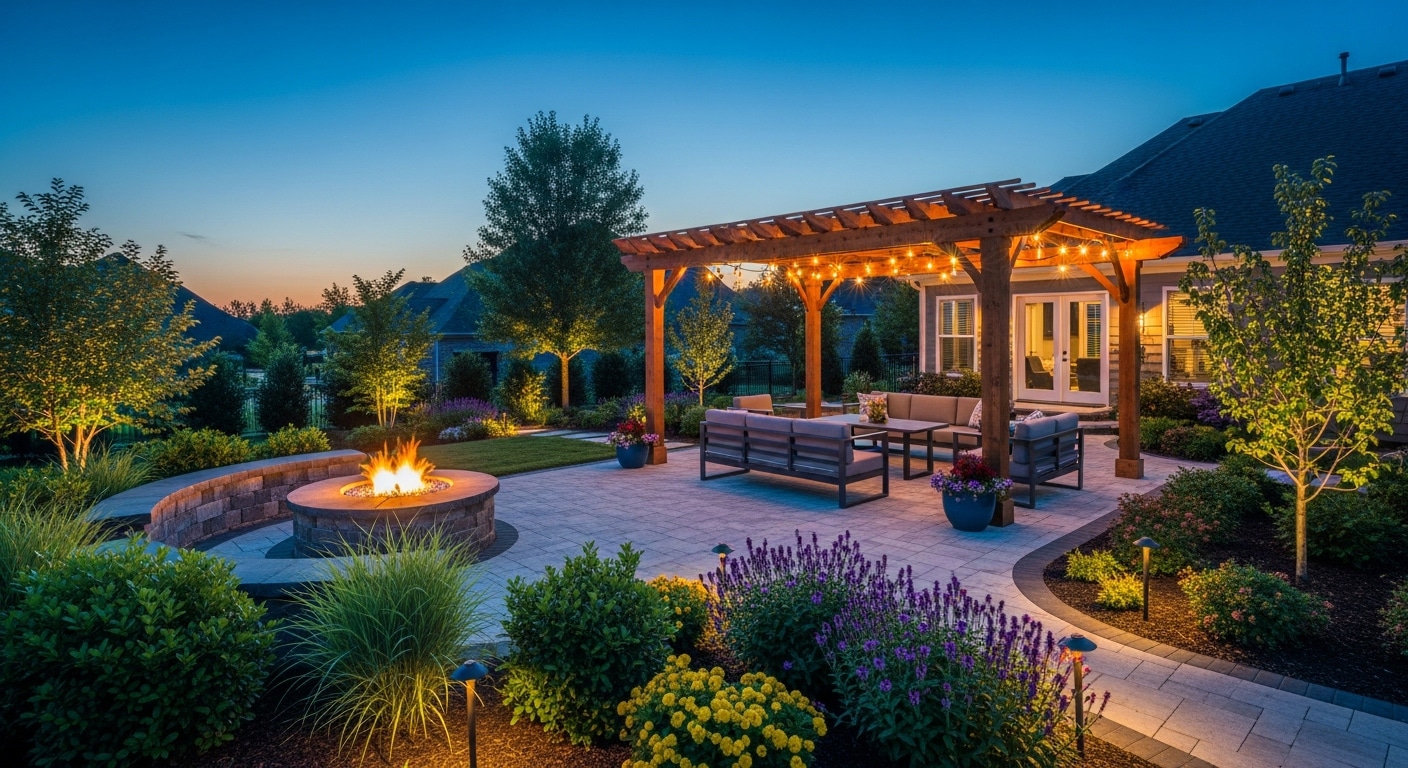
A water feature integrated into a Broken Arrow outdoor kitchen and covered patio design introduces a layer of sensory experience — the sound of moving water, visual focal point, and cooling effect — that no other single landscape element provides. The design challenge is integrating the water feature into the outdoor kitchen and covered patio’s masonry vocabulary without making the water feature feel like a separate element added later. VistaScapes & Design designs water features as integral components of the outdoor living environment when they are part of the project scope, incorporating the water feature’s masonry structure, plumbing rough-in, and electrical supply into the outdoor kitchen and covered patio construction at the planning stage rather than treating it as a post-construction add-on.
Water Feature Types for Outdoor Kitchen Projects
Water feature types appropriate for Broken Arrow outdoor kitchen and covered patio integration: wall fountains — a water feature built into the outdoor kitchen base’s end panel or the covered patio’s back wall, where water flows from a decorative spout into a basin recessed into the masonry structure; the wall fountain is plumbed with a recirculating pump, a water supply connection for refilling, and a drain or overflow; the water flows continuously when the pump is powered and creates a sound environment that masks ambient neighborhood noise; wall fountains integrated into the outdoor kitchen base’s masonry use the same stone veneer as the kitchen base, creating visual continuity between the kitchen and the water feature; the basin is typically 12 to 18 inches deep and 24 to 36 inches wide, built from CMU block and finished with the same stone or stucco as the base. Pondless waterfalls: a pondless waterfall system uses a buried reservoir (a vault filled with aggregate) that collects water and a submersible pump that recirculates water from the reservoir to a spill spillway at the top of a stacked stone or manufactured stone cascade; the water flows down the stone face and disappears into the aggregate surface above the reservoir, giving the appearance of a waterfall without a visible open pond; pondless waterfalls are safe for families with children (no open water hazard), require less maintenance than traditional ponds, and can be built adjacent to the covered patio in the landscaping zone as a backdrop to the outdoor kitchen seating area. Bubblers and fountainheads: a simple bubbler or fountainhead set into a natural stone basin or a pre-formed resin basin provides the sound and visual interest of moving water at a lower installation cost than a waterfall feature; the basin sits on the patio surface or is recessed into a landscape bed adjacent to the outdoor kitchen; bubblers are appropriate for smaller covered patio outdoor kitchen projects where a complex water feature is not in the budget but moving water is desired. Scupper and bowl fountains: a scupper is a water outlet mounted flush in the face of a masonry wall that allows water to flow in a thin sheet or jet into a catch basin below; multiple scuppers spaced along the outdoor kitchen’s back wall create a contemporary water feature that integrates with the kitchen’s masonry structure; scupper fountains are a lower-maintenance alternative to traditional pond or waterfall features and are appropriate for the modern design direction common in Broken Arrow outdoor kitchen projects.
Plumbing and Electrical Requirements
Water feature plumbing and electrical requirements for Broken Arrow outdoor kitchen integration: all water features require a recirculating pump (submersible or external) that moves water continuously from the basin or reservoir to the water outlet; pump selection depends on the head height (the vertical distance the pump must lift water from the basin to the outlet) and the desired flow rate (gallons per hour); a wall fountain with a 24-inch rise from basin to spout requires approximately 200 to 400 GPH pump capacity for a visual flow rate; a 4-foot waterfall cascade requires 800 to 1,200 GPH. Electrical: the recirculating pump requires a GFCI-protected 120V outlet within 6 feet of the pump location; the outlet must be weatherproof and installed on a circuit that does not share with other high-draw outdoor kitchen appliances; a timer or smart switch that controls the pump operation allows the homeowner to turn the water feature on and off on a schedule. Water supply: the water feature basin or reservoir will lose water to evaporation in Broken Arrow’s summer heat — a typical 50-gallon reservoir loses 1 to 3 gallons per day in summer; an automatic fill valve connected to the home’s water supply provides continuous top-off without manual refilling; the fill valve line is typically a 1/2-inch copper or PEX supply line run from the outdoor kitchen’s sink supply or from the home’s exterior hose bib. Winterization: Broken Arrow’s freeze-thaw climate requires winterizing the water feature’s plumbing before the first hard freeze in late November; the recirculating pump must be removed and stored indoors; the water supply must be shut off and drained; any water remaining in the basin or fountain basin should be removed or the basin covered with an insulating cover to prevent freeze-thaw cracking of the masonry. VistaScapes & Design designs the water feature’s masonry structure, plumbing rough-in, and electrical supply as part of the outdoor kitchen and covered patio construction scope and includes all winterization guidance at project completion.
Call VistaScapes & Design at (918) 779-1317 for a free outdoor kitchen consultation in Tulsa. We’ll design a water feature that integrates with your outdoor kitchen and covered patio’s masonry vocabulary.