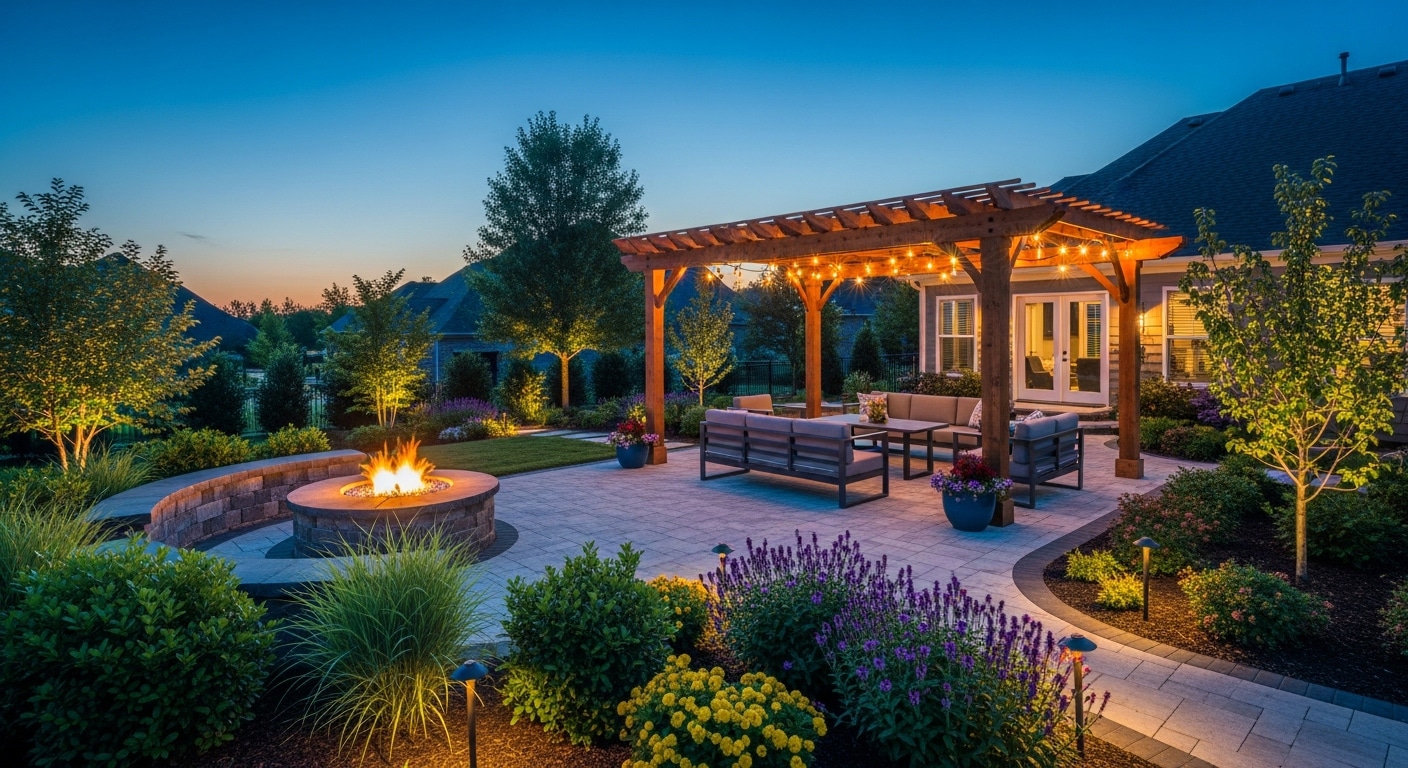
The paver patio versus concrete slab decision is one of the most common choices Tulsa homeowners face when planning an outdoor living surface, and it’s one where Oklahoma’s specific soil and climate conditions make the paver option more compelling than the comparison might suggest in other regions. VistaScapes & Design installs paver patios throughout Tulsa and can explain why pavers outperform poured concrete in Oklahoma’s outdoor conditions across most applications.
How Oklahoma’s Clay Soil Affects Concrete
Oklahoma’s expansive clay soils expand when wet and contract when dry — a cycle that exerts significant movement force on any rigid surface poured directly on or near that clay. A poured concrete slab in Tulsa’s outdoor environment is subject to heaving, settling, and cracking as the underlying clay moves through wet and dry cycles over multiple seasons. Concrete cracking is not a construction defect in Oklahoma — it is the predictable response of a rigid material to a dynamic subgrade. Once a concrete slab cracks, the crack is a permanent feature that widens over time. Paver installations are inherently more flexible: individual pavers are set on a compacted aggregate base that can be sized and graded to manage drainage and movement, and individual pavers that shift can be reset without demolishing the entire patio surface.
Repair and Replacement Comparison
When a poured concrete slab fails — cracks, heaves, or settles — the repair options range from cosmetic patching (which is visible and typically insufficient) to full removal and repour. Full concrete removal requires a jackhammer and dumpster haul, and the replacement poured slab starts the same cracking cycle again. When a paver patio section settles or pavers crack, the affected area is typically 3 to 10 pavers that can be removed, the base re-leveled, and the pavers reset or replaced — often in a half-day or less. This repairability makes pavers the genuinely lower long-term cost option despite their higher initial installation cost in most Tulsa outdoor living applications.
When Concrete Still Makes Sense
A concrete foundation is still the correct base for the masonry outdoor kitchen itself and for the covered patio structure’s footings — these applications require the rigidity and load-bearing capacity that a compacted aggregate base cannot provide for point loads. Concrete is also appropriate for areas with vehicular traffic, where paver joint movement would be accelerated. For the decorative outdoor living surface — the patio floor that forms the visual and functional heart of the outdoor environment — pavers provide better long-term performance than poured concrete in Tulsa’s soil and climate conditions.
Call VistaScapes & Design at (918) 779-1317 for a free patio consultation in Tulsa. We’ll evaluate your site conditions and recommend the patio surface that will perform best for your specific outdoor living project.