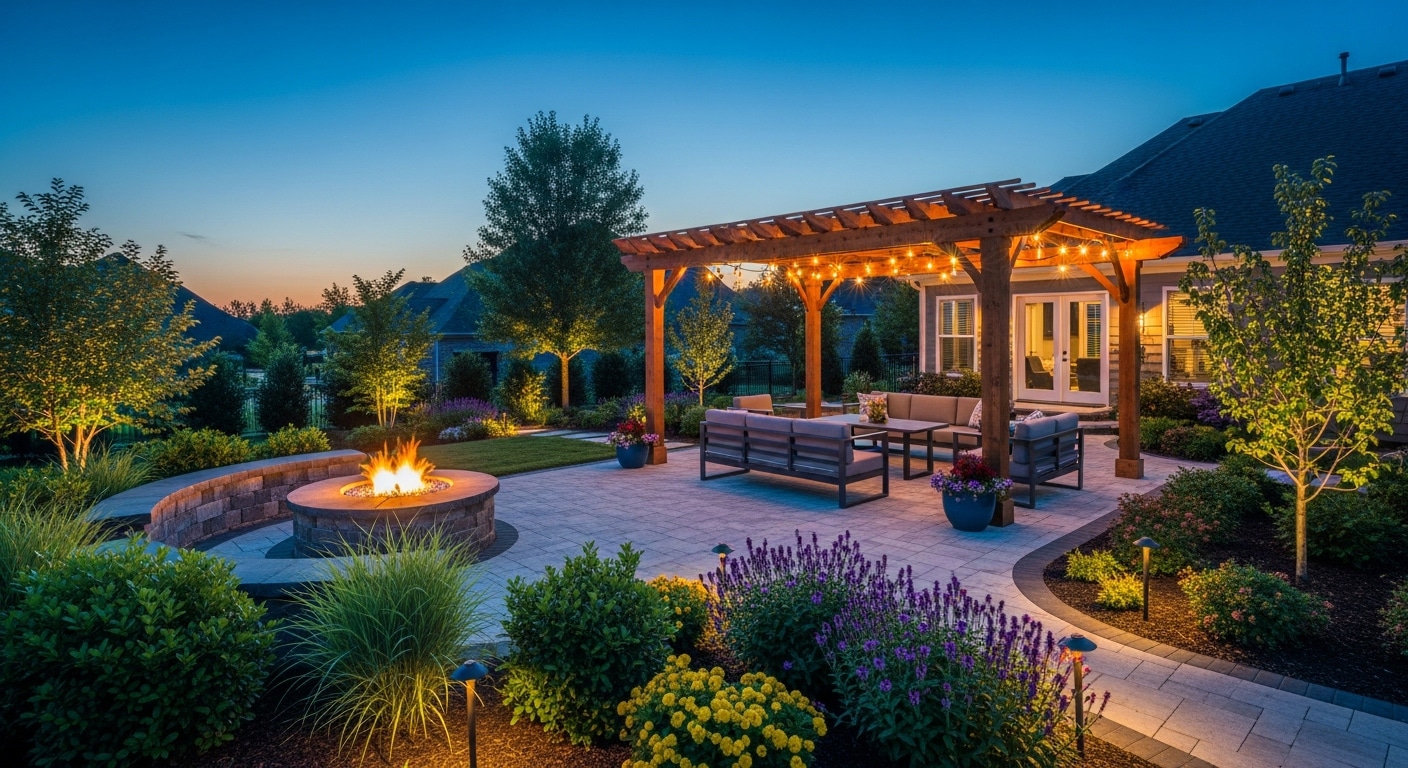
If you’re building a masonry outdoor fireplace in Broken Arrow or Tulsa, one of the first decisions is fuel type: traditional wood-burning or gas. Both produce beautiful fireplaces — but they deliver very different experiences in Oklahoma’s climate and have different practical implications. Here’s the honest comparison from a contractor who builds both.
Wood-Burning Outdoor Fireplaces in Oklahoma
The Case For Wood-Burning
- Authentic experience: Nothing replicates the crackle, smell, and atmosphere of a real wood fire — this is the experience many homeowners specifically want
- Fuel availability: Oklahoma has abundant hardwood — oak, pecan, hickory — readily available from local suppliers or from trimming your own trees
- No gas line required: No utility coordination, no gas line trenching, no monthly gas bills
- Cooking capability: Wood fires can support rotisserie cooking, cast iron cooking, and smoking
- Lower installation cost: A wood-burning masonry fireplace has lower utility infrastructure cost than a gas conversion
The Case Against Wood-Burning in Oklahoma
- Burn bans: Oklahoma counties issue outdoor burning bans 15–40+ days per year during dry conditions — wood-burning fireplaces are typically included. On the driest, most fire-weather days, your fireplace sits idle.
- Startup time: Building and lighting a wood fire takes 20–30 minutes before you have a usable fire
- Maintenance: Wood ash must be removed regularly; the chimney should be inspected and cleaned annually
- Smoke and neighbors: Wood smoke can become a nuisance issue in tighter suburban neighborhoods in Broken Arrow and Tulsa
- Storage: Seasoned firewood requires proper storage away from the home to prevent termite access
Gas Outdoor Fireplaces in Oklahoma
The Case For Gas
- Instant ignition: Turn a key or flip a switch — gas fires are ready in 30 seconds
- Burns during burn bans: Oklahoma’s burning restrictions typically exempt gas-fueled appliances — your gas fireplace works even when your neighbor can’t light a wood fire
- No ash or smoke: Clean burn with no cleanup, no chimney creosote buildup, no smoke smell on clothes
- Adjustable output: Turn it up or down based on temperature — precise control wood can’t match
- Natural gas cost in Oklahoma: Oklahoma natural gas rates are among the lowest in the country — operating a gas fireplace is very affordable
The Case Against Gas in Oklahoma
- Gas line infrastructure: If the home doesn’t have a nearby gas supply point, running a line to the outdoor fireplace adds $500–$2,000 to the project cost
- Less authentic atmosphere: Gas flames have a different character than wood — some homeowners find the constant, even flame less compelling
- Higher installation cost: Gas logs, burner pans, and controls add $800–$3,000 to the fireplace build cost
VistaScapes Recommendation for Oklahoma Homeowners
For most Broken Arrow and Tulsa homeowners who want to use their outdoor fireplace regularly throughout Oklahoma’s fall and spring seasons, we recommend gas. The burn ban issue alone is a significant practical consideration — missing 15–40 days per year of fire season on the most fire-weather-prone days significantly limits wood-burning use.
For homeowners who specifically want the authentic wood experience, aren’t in a dense suburban neighborhood, and are willing to manage the fuel and maintenance, wood-burning is a beautiful choice. We can also build a fireplace that accommodates a gas log insert in the future if you want the option to convert.
Call VistaScapes at 918-779-1317 to discuss which fireplace type is right for your outdoor project in northeast Oklahoma.