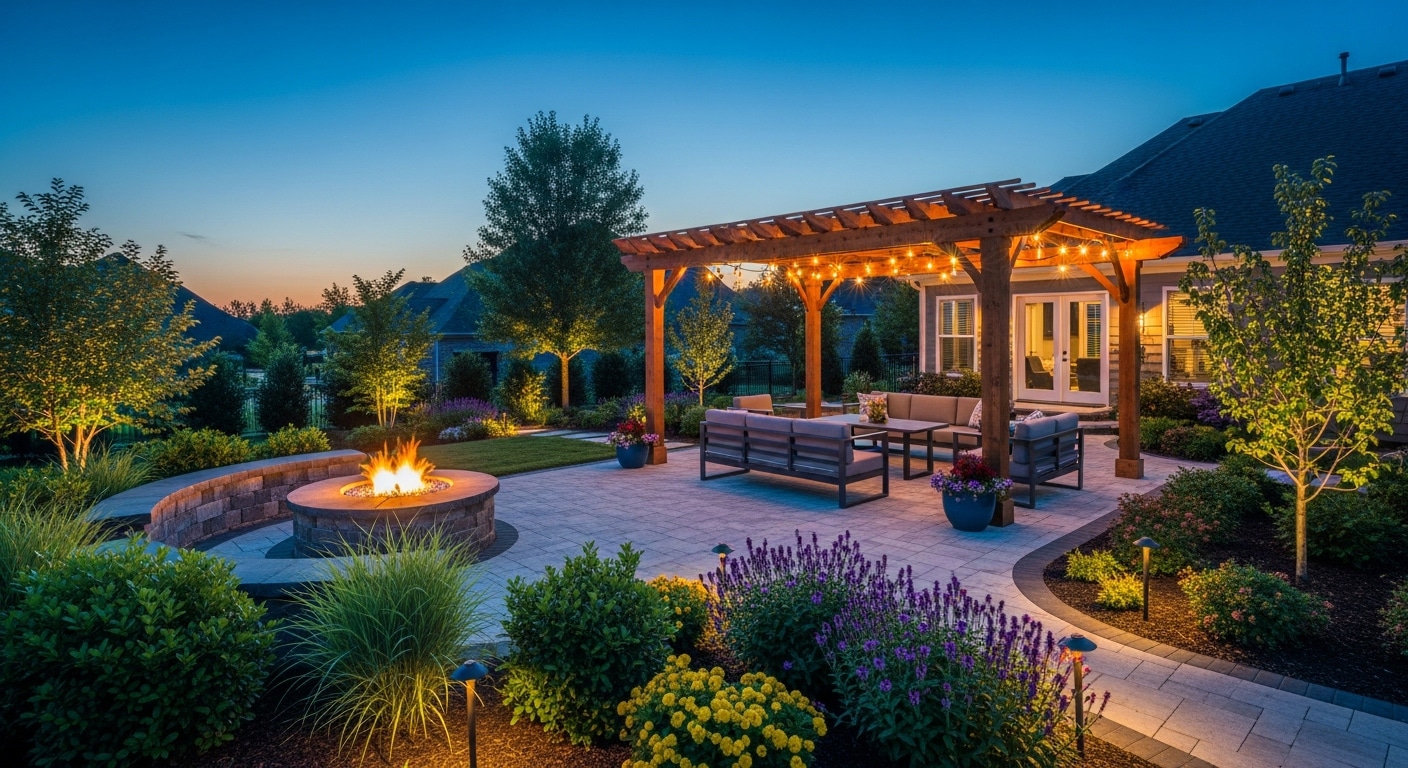
The wood versus gas outdoor fireplace question comes up in almost every outdoor living design consultation in Broken Arrow and Tulsa. Both fuel types produce beautiful, functional fireplaces. They are different experiences, different levels of convenience, and different commitments in construction and maintenance. Here is an honest comparison grounded in what northeast Oklahoma homeowners actually report about using each.
The Wood-Burning Experience
A wood-burning outdoor fireplace is the real thing — crackling fire, wood smoke, the ritual of building and tending a fire, and the physical warmth that radiates from a good hardwood fire. Oklahoma homeowners who grew up with wood fires, who hunt and camp, or who simply value the authentic sensory experience report that nothing replicates it. The smell, the sound, and the visual depth of a wood fire are distinct from gas in ways that are hard to quantify but immediately apparent when experienced.
Wood-burning fireplaces also work regardless of utility infrastructure — no gas line required, no dependence on natural gas service. In Oklahoma’s rural and semi-rural properties where natural gas is not available, a wood-burning fireplace is often the only option for a real masonry fireplace experience.
The Gas Fireplace Experience
A gas outdoor fireplace turns on with a switch or a remote and provides immediate, controllable flame at whatever level you want. There is no wood to source, store, and dry; no ash cleanup; no smoke drifting into the seating area on a wind shift; and no fire management required. For households with young children, the absence of hot embers and sparks is a meaningful safety advantage. For homeowners who want the ambiance of fire without the work of fire, gas delivers it reliably every time.
Gas outdoor fireplaces also produce significantly less combustion particulate than wood fires — relevant in Broken Arrow and Tulsa during air quality alert days and in neighborhoods where neighbors are close enough to be affected by smoke. Many HOAs in south Tulsa and Broken Arrow master-planned communities specifically restrict or prohibit wood-burning outdoor fireplaces for this reason; gas fireplaces are typically permitted where wood is not.
Construction and Installation Differences
A wood-burning outdoor fireplace requires a full masonry firebox with refractory brick lining, a smoke chamber, a damper, a properly sized flue, and a chimney cap. The construction is more complex and more expensive than a gas-only system. A gas fireplace or fire feature can use a simpler burner system inside the firebox — no damper needed, and the flue requirements are different (smaller or, for some gas systems, no traditional flue at all).
Gas fireplaces require a dedicated gas line — an add-on cost that applies whether you choose natural gas or propane. Wood-burning fireplaces require an ongoing wood supply — a cost that varies by usage but is real and recurring.
The Combination Option
Some Oklahoma homeowners build fireplaces designed for both: a proper wood-burning firebox with a gas starter — a small gas jet that ignites the wood fire without kindling or lighter fluid. This gives you the wood-fire experience with the convenience of a reliable gas ignition. It is the best of both worlds for homeowners who want authentic wood fire but appreciate not kneeling in the cold with newspaper and matches on a chilly October evening.