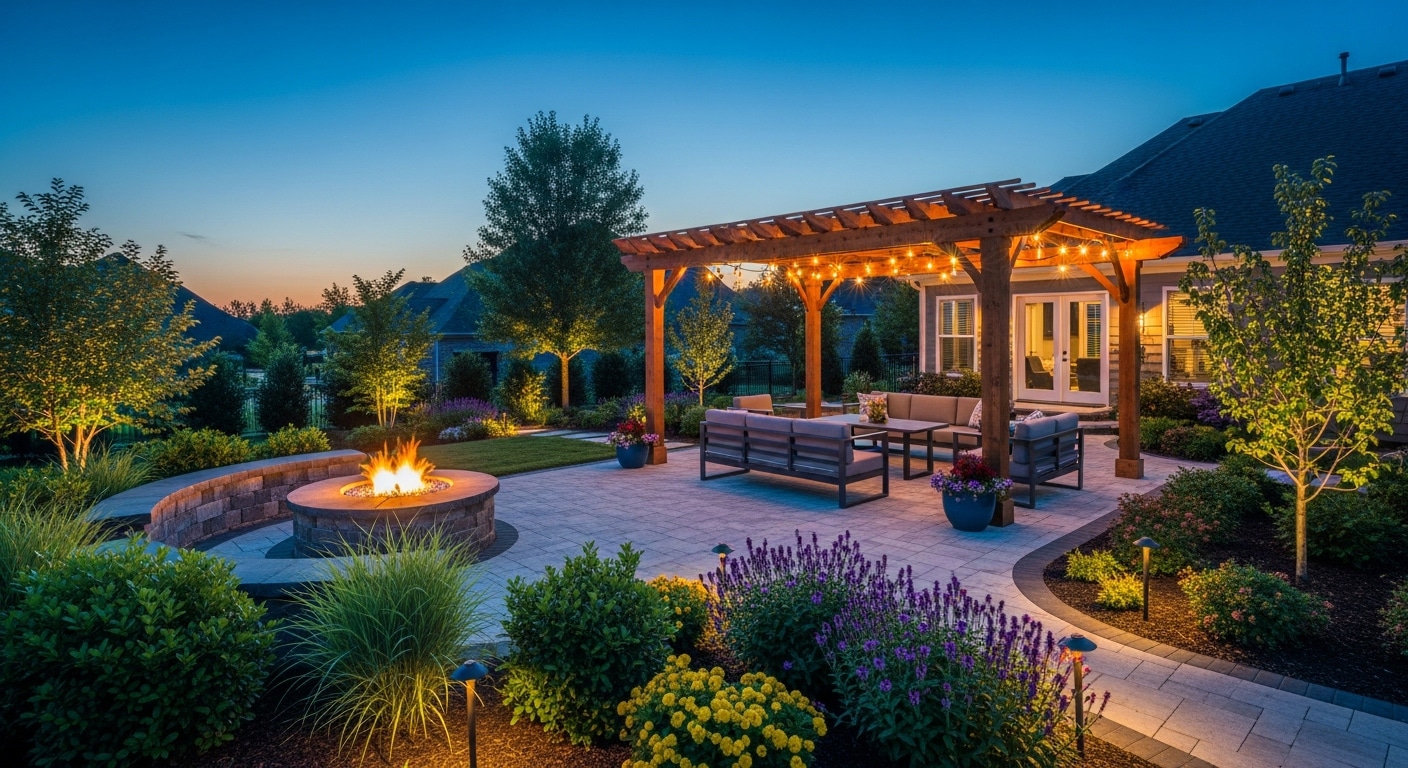
When planning a covered patio in Tulsa, one of the first structural decisions is the roof configuration — gable or hip. Both are appropriate for Oklahoma’s climate when properly engineered, and both are commonly built across the Tulsa metro. The choice affects wind performance, interior ceiling height, water drainage, aesthetic character, and cost. VistaScapes & Design builds both configurations and discusses the trade-offs on every covered patio project.
Gable Roof
A gable roof has two sloping roof planes that meet at a ridge, with triangular gable ends on the short sides of the structure. Gable roofs provide maximum ceiling height in the center of the structure — the apex of the gable interior can be 10 to 14 feet in larger structures, which creates an airy, pavilion-like feel that many homeowners prefer. Gable roofs also provide good drainage because both slopes drain water away from the center of the structure. The aesthetic is traditional and matches well with most Oklahoma residential architecture styles. The structural consideration for gable roofs in Oklahoma is the gable end — the triangular wall area at each end of the roof — which presents a larger surface area to wind. Properly engineered gable structures use adequate diagonal bracing and framing to resist wind load on the gable ends.
Hip Roof
A hip roof has four sloping planes that all meet at a central ridge or point, with no vertical gable end walls. Hip roofs are aerodynamically superior to gable roofs in wind-loading performance because they present a sloped surface to wind from all four directions rather than a flat gable end. This characteristic makes hip roofs a good choice for exposed sites in Oklahoma where prevailing wind loads are significant. The trade-off is ceiling height — a hip roof’s ceiling is consistent across the structure but does not reach the peak heights that a gable roof creates at the center. Hip roofs also require more complex framing at the corners where the four roof planes meet, which adds slight cost compared to a simpler gable configuration.
Attachment Method and Water Management
Attached covered patios — those connected to the home’s exterior wall — require a ledger board connection that must be properly flashed to prevent water infiltration at the wall junction. This is one of the most common failure points on improperly installed covered patios: water that enters behind the ledger board and flashing runs into the wall cavity and causes structural damage and mold growth over time. We flash all ledger board connections with proper step flashing and counterflashing that directs water over and away from the wall connection, not into it. Gutters on the perimeter of the covered patio roof are also important in Oklahoma’s heavy rain events — unmanaged roof runoff concentrated at the drip edge can saturate the patio base and undermine the foundation of adjacent structures.
Matching Existing Architecture
The covered patio roof pitch and configuration should complement the home’s existing roof design. A gable patio addition that matches the home’s existing gable pitch reads as a natural architectural extension of the home. A hip roof addition on a home with steep gable main roof may look disconnected. We evaluate the home’s existing roof pitch and configuration during the initial site visit and recommend a covered patio roof design that relates logically to the existing architecture rather than creating an addition that looks like an afterthought.
Call VistaScapes & Design at (918) 779-1317 for a free covered patio consultation in Tulsa. We’ll evaluate your home’s architecture, discuss gable vs hip roof performance for your specific site, and deliver a written proposal covering the complete structure.