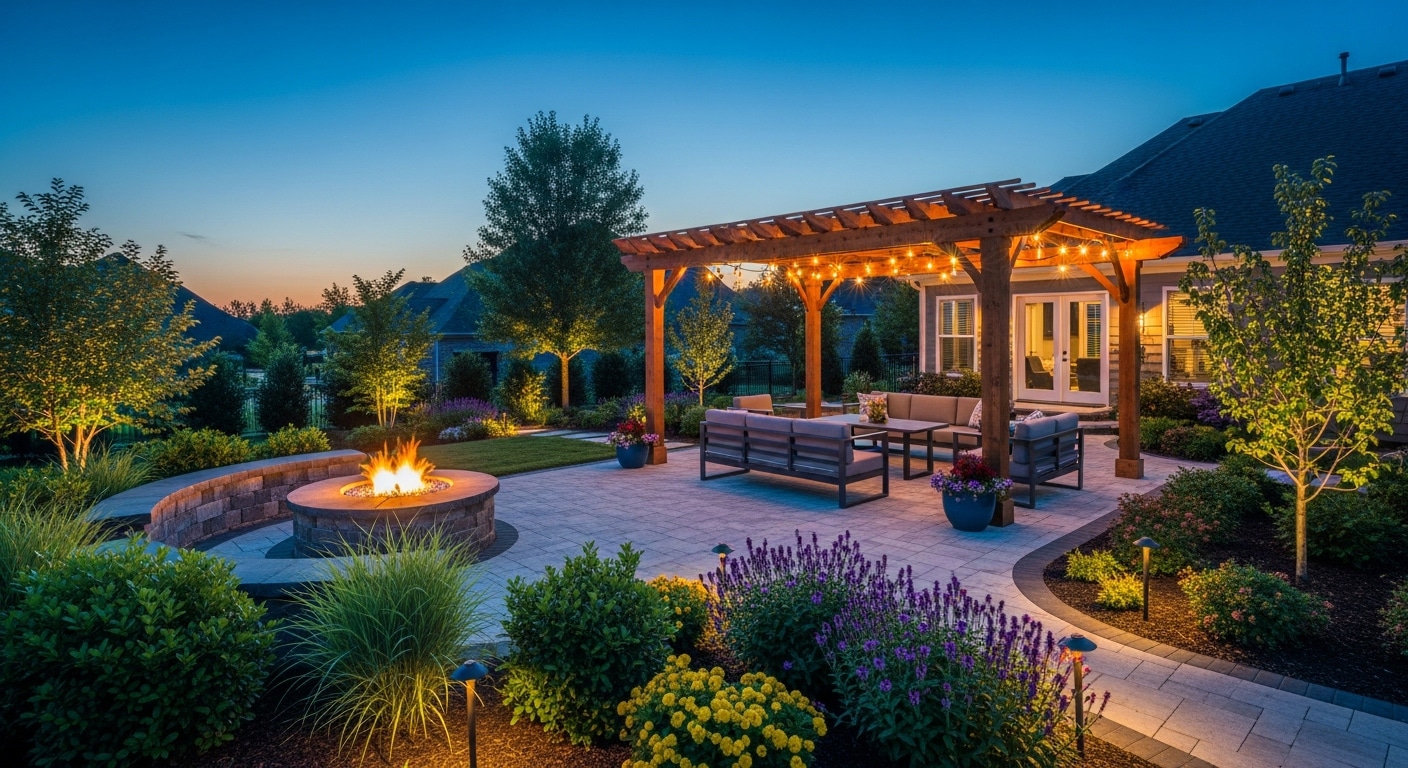
Winterizing Your Broken Arrow Outdoor Living Space — Annual Maintenance Checklist
Oklahoma winters in Broken Arrow aren’t brutal by northern standards, but they’re cold enough to damage outdoor living features that aren’t prepared properly. Irrigation systems burst, outdoor sinks freeze, patio materials absorb moisture they can’t shed before a freeze-thaw cycle damages them. A few hours of fall maintenance prevents repairs that cost far more than the time investment.
Here’s the complete winterization checklist for Broken Arrow outdoor living spaces.
Irrigation System Winterization
This is the most critical annual maintenance task for properties with in-ground irrigation. Oklahoma gets hard freezes that burst underground lines left full of water.
Option 1 — Blow-out with compressor: The standard method. A contractor connects a commercial air compressor to the irrigation system and blows each zone clear of water through the heads. Most reliable method for complete water removal. Should be done by a professional — incorrect air pressure can damage heads and valves.
Option 2 — System drain valves: Some irrigation systems have automatic or manual drain valves at low points. These are less reliable than blow-outs because they may not clear all water from lateral lines, particularly in flat terrain.
Timing: Complete irrigation winterization before the first hard freeze (typically late November in Broken Arrow, but can come in October in cold years). Don’t rely on the calendar — watch the forecast for sustained below-25°F temperatures.
Outdoor Kitchen Winterization
Grill Maintenance
Give the grill a thorough cleaning before winter: clean grates, clean burners and burner tubes, remove grease from the grease trap. A winter’s worth of moisture on a dirty grill creates corrosion. Cover the grill with a manufacturer-recommended cover or use a quality universal cover that fits properly — a loose cover that collects water in pockets causes more moisture damage than no cover.
Refrigerator
If you have an outdoor refrigerator that you won’t use during cold months: clean thoroughly, remove all food, and leave the door slightly open to prevent mold and odor. If the refrigerator is rated for outdoor temperatures below 35°F (many consumer outdoor refrigerators are not), you can leave it running year-round. If not, turn it off for sustained cold weather.
Sink and Water Lines
Drain outdoor sink water lines before hard freeze. Turn off the supply shutoff valve inside the home or structure, then open the outdoor faucet to drain any remaining water in the line. Leave the faucet in the open position through winter so any residual water can drip out rather than collecting and freezing. For frost-free faucets, the design handles this automatically when the interior shutoff is closed.
Patio Surface Maintenance
Sealing — Best Done in Fall
If your stamped concrete or concrete paver patio is due for resealing (typically every 2–3 years), fall is the ideal time. Sealing creates a moisture barrier that prevents water from penetrating the surface, freezing, and causing scaling or joint deterioration. Apply sealer when temperatures are consistently above 50°F during application and for 24 hours after — this rules out mid-winter application.
Paver Joint Sand
Check polymeric sand in paver joints in fall. Depleted or crumbling joint sand allows water infiltration below the pavers, which can cause heaving during freeze-thaw cycles. Replenish joint sand where needed and reseal if appropriate.
Natural Stone
Natural flagstone and limestone patios benefit from sealing every 3–5 years. Unsealed stone has higher water absorption; absorbed water that freezes in winter expands and can cause surface scaling. Check the sealer condition — if water doesn’t bead on the surface, it’s time to reseal.
Outdoor Fireplace and Fire Pit
Masonry Fireplace
Inspect mortar joints on the exterior and firebox interior for cracking or missing mortar. Fall is the time to address any repointing before moisture gets into compromised joints during winter. Ensure the damper closes completely — a draft-free firebox stays drier in winter. If the fireplace doesn’t have a cap with a spark arrestor, adding one prevents water accumulation in the flue.
Gas Fire Pit
Shut off the gas supply at the ball valve when not in use during extended cold periods. Ensure any propane tanks are stored in a covered location — propane tanks themselves are fine in cold weather, but regulator connections can freeze in severe cold.
Patio Furniture and Accessories
- Cushions: Store indoors or in sealed outdoor storage. Oklahoma’s winter ice and rain deteriorate cushion fabric and foam significantly faster than dry storage.
- Metal furniture: Cover with fitted covers or move to covered storage. Winter moisture causes rust on powder-coated and galvanized furniture, particularly at worn edges.
- Concrete and stone furniture: Generally fine to leave outdoors year-round, but concrete planters and ornaments can crack if water gets into cracks and freezes. Check for any hairline cracks before winter.
- String lights: Leave in place if they’re rated for outdoor use year-round. Take down and store if they’re temporary strand lights not rated for wet winter conditions.
Questions About Winterization or Maintenance?
VistaScapes can assist with irrigation blow-out coordination, patio sealing, and masonry maintenance for your Broken Arrow outdoor living space. Call 918-779-1317 with questions about seasonal maintenance for your specific features.