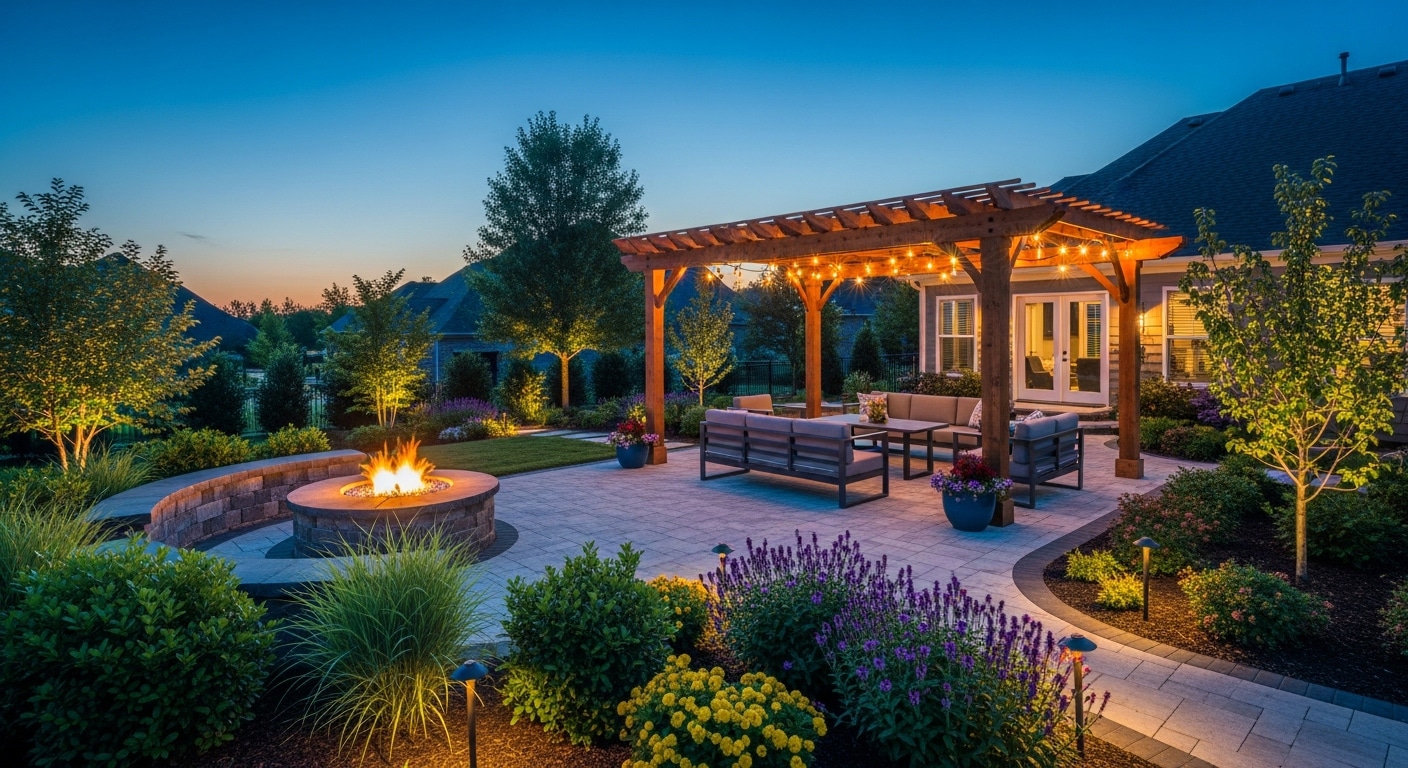
The soffit and fascia of a Broken Arrow covered patio — the horizontal ceiling-like surface under the covered patio’s roof overhang (soffit) and the vertical trim board at the roof’s eave edge (fascia) — are among the most visible exterior finish elements of the covered patio structure. The soffit and fascia selection determines both the maintenance requirement and the visual quality of the covered patio’s perimeter, and these elements must coordinate with the home’s existing soffit and fascia materials for a cohesive appearance. VistaScapes & Design specifies soffit and fascia materials for every Broken Arrow covered patio project as part of the construction specification process.
Soffit Material Options
Soffit material options for Broken Arrow covered patio structures: wood soffit (painted or stained) — a traditional soffit material using 1×6 or 1×8 tongue-and-groove pine or cedar boards installed horizontally under the covered patio’s rafter tails; wood soffit provides warmth and character that vinyl or aluminum soffit cannot replicate; for covered patios where the wood ceiling is a primary design feature, extending the wood T&G material from the enclosed ceiling area to the soffit area creates a continuous wood surface from inside to outside; wood soffit in Broken Arrow’s outdoor conditions requires finish maintenance — repainting or restaining every 3 to 5 years; wood soffit is susceptible to moisture damage if the soffit’s finish is not maintained, particularly in shaded north-facing applications where the wood cannot dry between rain events. Vinyl soffit — a low-maintenance soffit material fabricated from PVC vinyl with a perforated or solid panel profile; vinyl soffit is available in white, beige, and a range of standard house trim colors; vinyl soffit does not rot, does not require painting, and provides adequate ventilation through its perforated panels for the covered patio’s roof cavity; vinyl soffit is appropriate for covered patio applications where low maintenance is a priority and the design direction is compatible with the material’s appearance; vinyl soffit can look inexpensive in premium covered patio environments where the design calls for a higher-quality material. LP SmartSide or fiber cement soffit — an engineered wood or fiber cement panel product that provides a more premium appearance than vinyl with lower maintenance than solid wood; LP SmartSide soffit panels are available in primed (field-paintable) or pre-primed profiles that match the appearance of painted wood; fiber cement soffit (James Hardie SoffitPanel) is available in smooth or texture profiles and provides excellent durability in Broken Arrow’s outdoor conditions; both LP SmartSide and fiber cement require painting but do not rot and do not require painting as frequently as solid wood (repaint every 10 to 15 years with quality exterior paint). Beadboard soffit panels — a dimensional molded vinyl or cellular PVC panel with a beadboard groove pattern that provides the appearance of a beadboard wood ceiling under the covered patio’s overhang; beadboard soffit panels are appropriate for covered patios where a traditional or Craftsman design character is desired; cellular PVC beadboard soffit panels are dimensionally stable, do not rot, and require no maintenance beyond occasional cleaning.
Fascia Material and Sizing
Fascia material options and sizing for Broken Arrow covered patio structures: dimensional lumber fascia — a 2×8 or 2×10 pressure-treated or cedar fascia board nailed to the ends of the covered patio’s rafter tails provides a clean eave edge that conceals the rafter tails and provides a mounting surface for gutters; painted fascia boards in colors that match the home’s existing fascia produce the most cohesive appearance for an attached covered patio; dimensional lumber fascia in Broken Arrow’s outdoor environment requires caulking of all butt joints and end cuts and repainting every 5 to 7 years. LP SmartSide fascia — an engineered wood fascia product that provides wood appearance with better moisture resistance than solid lumber; LP SmartSide fascia is available in standard dimensional widths matching nominal lumber profiles; it is factory-primed and requires painting on site; it outperforms solid wood in terms of resistance to splitting, warping, and moisture damage. Cellular PVC fascia — a foam-core PVC trim board that looks like painted wood but does not rot, split, or require repainting; cellular PVC fascia (Azek, WOLF, Kleer) is manufactured in nominal lumber widths (1×8, 1×10, 1×12) and can be cut, nailed, and painted in the field like wood; the primary advantage of cellular PVC fascia for Broken Arrow covered patios is its zero-maintenance characteristic — once installed and painted, it does not require repainting for the life of the covered patio. Fascia sizing: the fascia board width should be proportional to the covered patio’s scale; a standard residential covered patio with 2×8 or 2×10 rafters uses a 1×8 or 1×10 fascia board; a larger covered patio with a higher roof pitch and greater eave height may use a 1×10 or 1×12 fascia for visual weight that matches the structure’s scale. VistaScapes & Design specifies soffit and fascia materials based on the homeowner’s maintenance preferences and the design direction established for the covered patio project.
Call VistaScapes & Design at (918) 779-1317 for a free covered patio consultation in Broken Arrow. We’ll review soffit and fascia material options for your covered patio and include the pricing for each option in the project proposal.