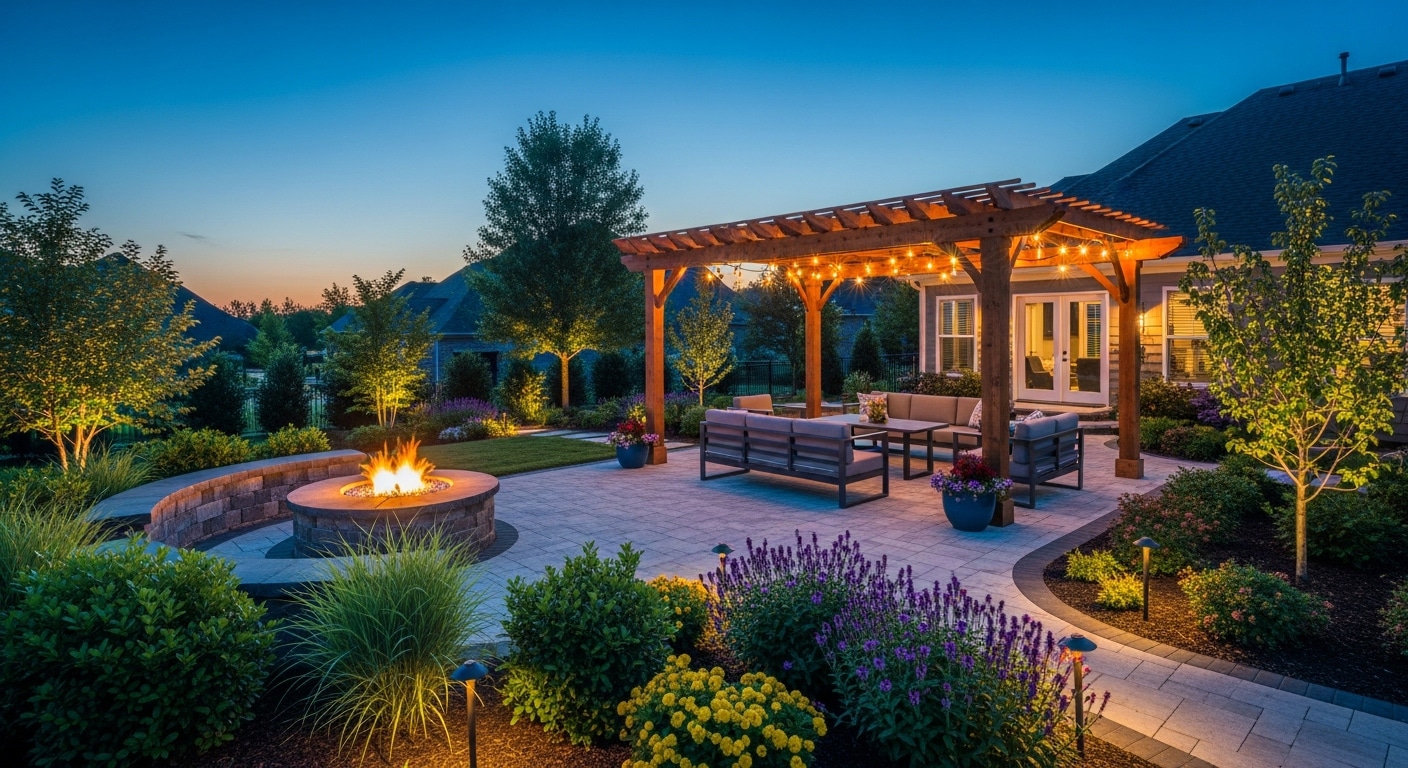
The gas supply line for a Broken Arrow masonry outdoor kitchen must be sized correctly for the combined BTU load of all the gas-fired appliances in the kitchen — the built-in grill, the side burner, the infrared overhead heater, and the gas firepit if included. An undersized gas line delivers inadequate flow to the appliances, which produces weak, uneven flame output and poor cooking performance; a line that was adequate for a single appliance may be undersized when additional appliances are added later. Gas line sizing for outdoor kitchens requires understanding the BTU loads, the pipe length from the home’s gas meter to the outdoor kitchen, and the pressure requirements of the appliances. VistaScapes & Design coordinates gas line sizing with licensed plumbers on every Broken Arrow outdoor kitchen project to ensure the supply is adequate for all planned appliances.
BTU Load Calculation
BTU load calculation for Broken Arrow outdoor kitchen gas supply lines: appliance BTU loads — the gas supply system must deliver sufficient flow to meet the combined maximum BTU demand of all gas-fired appliances in the outdoor kitchen; typical appliance BTU demands: a 36-inch built-in grill (Blaze Professional LUX) requires 68,000 BTU/hr; a 44-inch built-in grill requires 93,000 BTU/hr; a standard single side burner requires 15,000 BTU/hr; a double side burner requires 30,000 BTU/hr; a ceiling-mounted infrared heater (Bromic Tungsten Smart-Heat) requires 30,000 BTU/hr; a gas firepit with 72,000 BTU/hr burner; a complete outdoor kitchen with a 44-inch grill, double side burner, one infrared heater, and a firepit may have a combined load of 225,000 BTU/hr. Diversity factor — in practice, not all appliances run at maximum output simultaneously; a diversity factor of 0.75 to 0.80 is commonly applied to the combined appliance BTU load to size the gas supply line for practical demand rather than theoretical maximum; applying a 0.80 diversity factor to a 225,000 BTU/hr total load produces a design load of 180,000 BTU/hr for gas line sizing. Natural gas vs propane — the gas supply calculation differs for natural gas (delivered by the utility at approximately 0.5 to 0.7 PSI at the meter) and liquid propane (delivered from a tank at 11 inches water column [0.4 PSI] pressure at the regulator); natural gas has a lower BTU content per cubic foot (approximately 1,020 BTU per cubic foot) compared to propane (approximately 2,500 BTU per cubic foot), so natural gas lines must carry a higher volume flow than propane lines for the same BTU demand; in areas of Broken Arrow served by ONG (Oklahoma Natural Gas), natural gas is the preferred fuel for outdoor kitchens because it eliminates propane tank refill logistics; propane is appropriate for properties without natural gas service.
Pipe Sizing and Installation
Gas pipe sizing and installation for Broken Arrow outdoor kitchen supply lines: pipe diameter selection — gas supply pipes are sized using the American Gas Association (AGA) tables that correlate the pipe diameter, pipe length, and BTU demand to ensure adequate pressure at the appliance connection; a natural gas supply line for a complete outdoor kitchen (180,000 BTU design load) at 60 feet from the home’s gas meter typically requires a 3/4-inch diameter black iron or CSST (Corrugated Stainless Steel Tubing) supply line; at longer distances (80 to 100 feet), the pipe may need to be upsized to 1-inch diameter to compensate for pressure drop over the longer run; the licensed plumber is responsible for confirming the pipe sizing based on the actual appliance loads and the distance from the meter. CSST vs black iron pipe — CSST (TracPipe, CounterStrike, Gastite) is a flexible stainless steel tubing system that has largely replaced rigid black iron pipe for residential gas distribution; CSST installs faster than black iron because it bends around obstacles without elbows and connects with proprietary fittings; CSST must be bonded to the home’s electrical ground system (per the National Fuel Gas Code and manufacturer requirements) to protect against lightning-induced arc damage to the corrugated tubing; improperly bonded CSST is a fire risk and is a known source of insurance claims — the licensed plumber must confirm proper bonding at the gas line installation inspection. Shutoff valve requirements — a manual shutoff valve accessible without tools must be installed within 6 feet of each gas appliance for emergency shutoff; most outdoor kitchen grill installations include a shutoff valve at the grill stub-out inside the masonry base cabinet; for outdoor kitchens with multiple appliances on a common supply branch, a branch shutoff valve near the masonry base allows the outdoor kitchen’s gas supply to be isolated from the home’s system without affecting the indoor gas service. Pressure test — the completed gas supply system must pass a pressure test (typically 10 PSI test pressure held for 15 minutes) before the system is put into service; the pressure test is performed by the licensed plumber and witnessed by the building inspector during the rough-in gas inspection. VistaScapes & Design coordinates the gas line design, permit, rough-in inspection, and pressure test with the licensed plumber on every Broken Arrow outdoor kitchen project.
Call VistaScapes & Design at (918) 779-1317 for a free outdoor kitchen consultation in Broken Arrow. We’ll coordinate the gas supply design with our licensed plumber to ensure the line is properly sized for your complete outdoor kitchen appliance package.