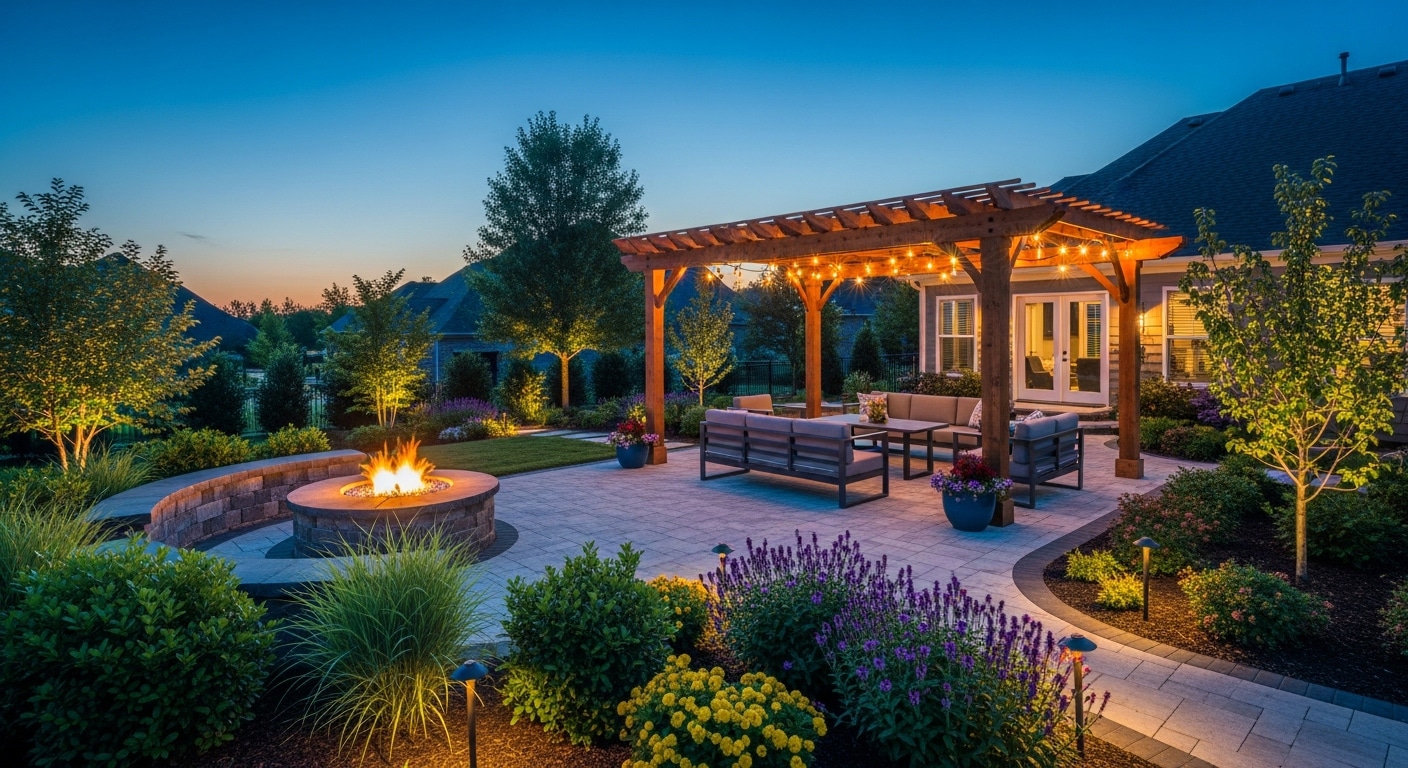
Adding a fire feature to an outdoor living space extends usability into Oklahoma’s fall and winter months and creates a natural gathering point that fundamentally changes how a backyard feels. Tulsa homeowners planning a fire feature typically choose between a built-in gas fire pit and a masonry outdoor fireplace — structures that serve different functions, create different social environments, and carry different costs. VistaScapes & Design builds both and can help you identify which fits your space and how you plan to use it.
Seating Configuration
The fundamental social difference between a fire pit and an outdoor fireplace is seating direction. A fire pit allows guests to sit in a circle around all four sides of the fire, creating a more inclusive, conversation-friendly configuration. Four to eight people can face the fire simultaneously without anyone sitting behind the feature. An outdoor fireplace creates a directional focal point — guests face the fireplace from the front, similar to gathering around an interior fireplace. This works well for covered patio settings where the fireplace anchors one wall of the outdoor room, but it tends to create a narrower seating arrangement compared to a fire pit.
Heat Output and Wind Performance
Outdoor fireplaces radiate heat directionally — most of the warmth projects forward from the firebox opening, which benefits guests seated facing the fireplace. Fire pits radiate heat in all directions at a lower intensity per person. In Oklahoma’s wind conditions — which can be significant, particularly in open backyard settings — outdoor fireplaces perform more consistently because the firebox is partially enclosed and the fire is shielded from wind. Gas fire pits with quality burner systems also perform well in wind, but the wind influence on flame height and heat output is more noticeable on a fire pit than on an enclosed fireplace.
Gas vs Wood Burning
Most VistaScapes fire features are gas-burning — either natural gas connected to the home’s gas line or propane from a dedicated tank. Gas fire features start instantly, produce no smoke, require no wood storage, and can be controlled with a valve or remote. Wood-burning outdoor fireplaces are legal in most Tulsa-area jurisdictions but subject to any burn bans issued during drought conditions. We typically recommend gas for convenience and consistent usability. If you prefer the wood-burning experience, we can build a masonry outdoor fireplace designed for wood use with appropriate firebox proportions, throat geometry, and chimney height for proper draft.
Cost Comparison
Built-in gas fire pits are generally less expensive than masonry outdoor fireplaces. A quality built-in gas fire pit with a concrete block base, stone veneer surround, glass media, and linear or round burner typically costs less than a full masonry fireplace with a firebox, hearth, chimney, and decorative surround. The cost gap widens when the fireplace includes a mantel, integrated seating walls, or a hearth extension. Both structures require a gas line connection from the home if natural gas is the fuel source, and the line extension cost depends on the distance from the existing gas meter to the fire feature location.
HOA and Permit Considerations
Some Tulsa-area HOAs restrict open fire features or require design approval before construction. Outdoor fireplaces with chimneys above a certain height may also require building permits in some jurisdictions. We check local requirements and review HOA guidelines as part of the pre-proposal process so there are no compliance surprises after construction begins.
Call VistaScapes & Design at (918) 779-1317 for a free fire feature consultation in Tulsa. We’ll evaluate your space, discuss your use case, and deliver a written proposal for the structure that best fits your outdoor living plan.