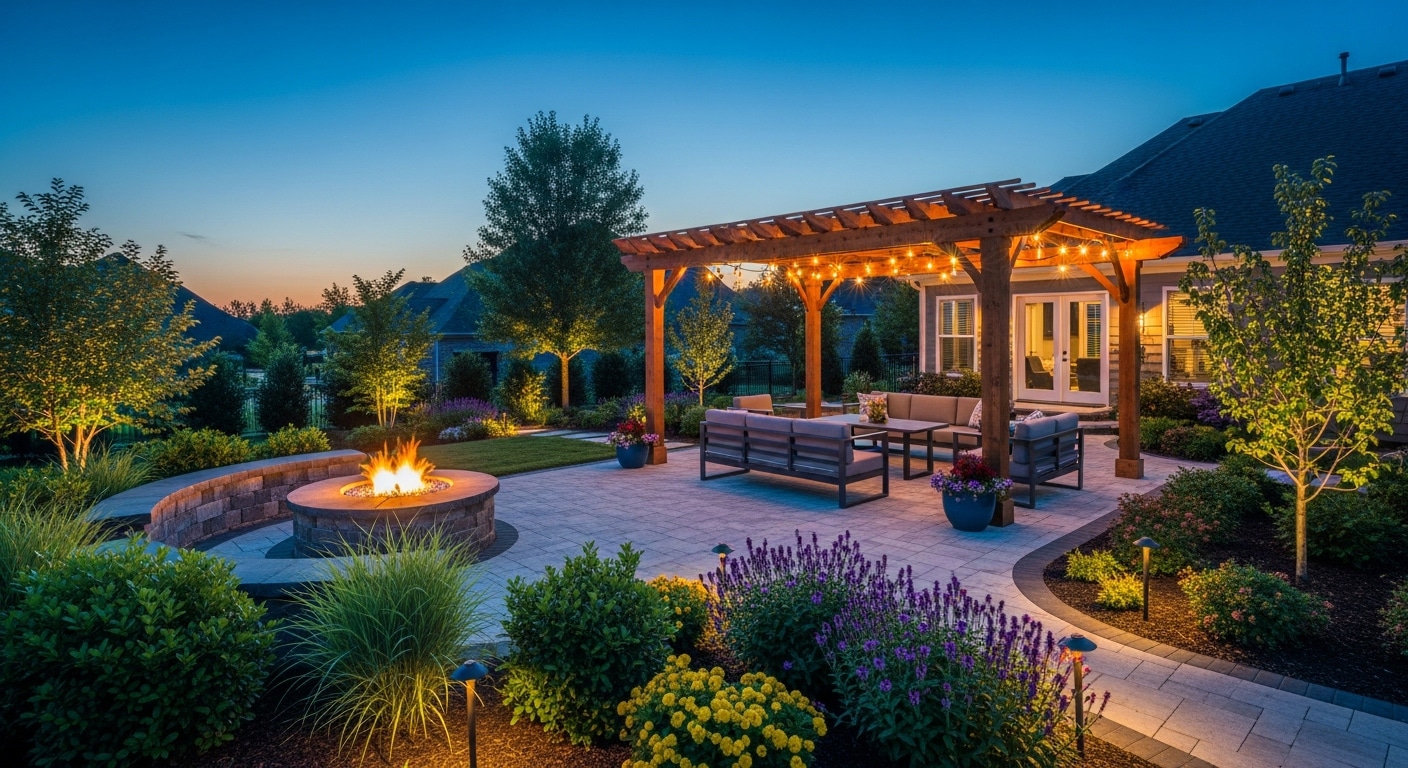
One of the first decisions homeowners face when planning an outdoor kitchen is where to put it — on an existing deck, on a new concrete pad, or on a different patio surface altogether. Each option has real tradeoffs in terms of cost, safety, durability, and design flexibility. VistaScapes has built outdoor kitchens on every surface type and can walk you through the decision.
Outdoor Kitchens on Wooden Decks
It is possible to build an outdoor kitchen on a wooden deck, but it requires careful planning. The primary concerns are:
- Structural load — outdoor kitchen masonry structures are heavy. A typical outdoor kitchen island with concrete countertops, stone veneer, and appliances can weigh 2,000 to 5,000+ pounds. Your deck must be engineered to handle that load.
- Fire safety — open flames on or near wood decking require non-combustible clearances. Gas grills and pizza ovens have minimum clearance requirements from combustible materials that must be met.
- Water and moisture — outdoor kitchens generate grease, spills, and steam. Wood decks exposed to sustained moisture can deteriorate faster, especially underneath an enclosed kitchen island structure.
When decks are properly engineered and the non-combustible clearances are respected, a deck-mounted outdoor kitchen can work well and look great. Many homeowners choose this route because they already have an existing deck and don’t want to pour a new slab.
Outdoor Kitchens on Concrete Pads
A concrete pad is generally the most stable and lowest-maintenance base for an outdoor kitchen. Key advantages include:
- No structural load concerns — concrete can handle the weight of any outdoor kitchen design
- No fire clearance complications from combustible decking materials
- Easier to clean — grease and food spills wash off easily
- Lower long-term maintenance than wood decking
- Can be stained, stamped, or overlaid with pavers or flagstone for aesthetic upgrades
The main downside is cost if you don’t have a concrete pad already — pouring a new slab adds to the overall project budget, typically $3,000 to $8,000 depending on size and thickness.
Pavers and Flagstone as an Alternative
Many VistaScapes clients choose to install an outdoor kitchen on a paver or flagstone patio surface. Pavers are non-combustible, handle weight well when installed over a proper base, and provide a high-end aesthetic. Flagstone and travertine are popular choices in the Tulsa metro area. These surfaces cost more than plain concrete but offer a significant upgrade in visual appeal.
What VistaScapes Recommends
If you’re starting from scratch, we generally recommend a concrete or paver base for simplicity and safety. If you have an existing deck you love and want to keep, we can design a solution that works safely on your deck — we’ll just need to assess its current structural condition first.
Contact VistaScapes at 918-779-1317 to discuss your specific situation and get a recommendation based on your property.