Ventilation is one of the most discussed — and most misunderstood — aspects of outdoor kitchen design. Indoor kitchens need powerful range hoods to capture steam, grease, and combustion byproducts that would otherwise deposit on cabinets and surfaces. Outdoor kitchens operate in open air, which changes the equation dramatically. Here’s what Oklahoma homeowners need to know about ventilation, grill hoods, and airflow when designing their outdoor kitchen.
Do You Need a Grill Hood for an Outdoor Kitchen?
For a fully open-air outdoor kitchen — one with no roof structure overhead and open space on all sides — a grill hood is generally not required for air quality or safety. The open environment naturally disperses combustion gases, smoke, and steam far more effectively than any mechanical ventilation system could achieve.
However, if your outdoor kitchen is built under a covered structure — a pergola, covered patio, or pavilion — the calculus changes. A covered space restricts natural air movement, which can allow smoke, gas fumes, and carbon monoxide from gas appliances to accumulate to uncomfortable or unsafe levels. In covered outdoor kitchens, ventilation becomes important.
Ventilation Under Covered Outdoor Kitchens
Oklahoma’s climate strongly favors covered outdoor kitchens — afternoon thunderstorms, summer UV intensity, and occasional late-season heat all make a covered structure practical. If your build includes a roof, plan ventilation into the structure from the beginning:
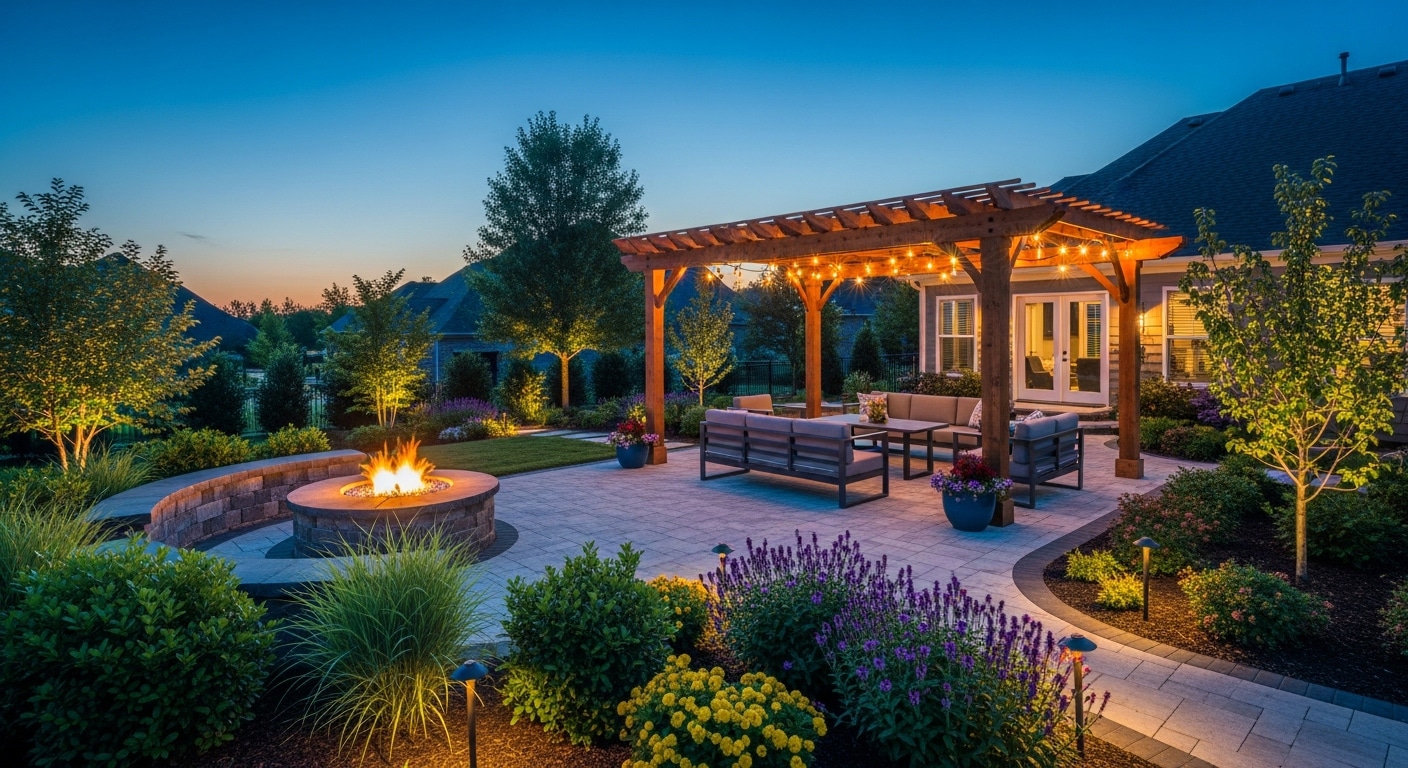
- Open-side pergola designs — standard lattice or slatted pergolas allow substantial airflow through the structure even with a roof overhead. Smoke and heat escape through the slats and open sides. This is the most common “covered” outdoor kitchen configuration in Oklahoma and generally does not require mechanical ventilation.
- Solid-roof covered patios — these trap heat and smoke more than open pergolas. If your kitchen has a fully solid roof with enclosed sides, installing a ceiling fan or overhead ventilation fan directly above the cooking zone helps move air effectively.
- Three-sided or fully enclosed outdoor kitchens — true semi-enclosed outdoor kitchen pavilions require engineered ventilation, including mechanical exhaust and fresh-air introduction, and may be subject to local building code requirements for gas appliance ventilation.
Outdoor-Rated Grill Hoods: When They Make Sense
Outdoor-rated grill hoods (also called outdoor range hoods) are available from manufacturers like Broan, Zephyr, Ventahood, and Wolf for outdoor applications. They’re designed with stainless steel construction that withstands outdoor weather exposure and typically vent directly through the structure’s wall or roof rather than through ductwork to an indoor system.
A grill hood for an outdoor kitchen makes practical sense when:
- Your outdoor kitchen is under a solid roof with limited natural airflow
- You cook heavily with a lot of grease (frequent fry cooking, heavy BBQ) and want to protect the overhead structure from grease accumulation
- Your outdoor kitchen is adjacent to the home’s exterior and you want to direct smoke away from windows and doors
- Local building code requires mechanical ventilation for the configuration
Ceiling Fans: The Practical Oklahoma Ventilation Solution
For most covered outdoor kitchens in the Tulsa and Broken Arrow metro, ceiling fans do more practical work than a grill hood. An outdoor-rated ceiling fan mounted directly above or adjacent to the cooking area moves air continuously, disperses smoke and heat before they accumulate, and makes the space significantly more comfortable during Oklahoma’s hot summer months. Outdoor-rated fans (Hunter, Minka Aire, and Big Ass Fans all make excellent outdoor-rated models) withstand humidity, rain exposure, and temperature swings.
Gas Appliance Ventilation and Safety
Natural gas and propane appliances produce carbon monoxide during combustion. In open air, this disperses harmlessly. In an enclosed or semi-enclosed space, CO can accumulate to dangerous levels. If your outdoor kitchen is in a structure that’s more enclosed than a standard open-sided pergola, always ensure:
- The cooking area has at least two open sides with unobstructed airflow
- Gas lines include proper shutoffs and pressure regulators
- Never operate gas appliances in a fully enclosed space without engineered mechanical ventilation and CO detection
Frequently Asked Questions — Outdoor Kitchen Ventilation
VistaScapes designs covered outdoor kitchens with ventilation in mind from the first sketch. We ensure your build is comfortable, safe, and code-compliant. Call 918-779-1317 to schedule a free design consultation in Broken Arrow, Tulsa, Owasso, or anywhere in the northeast Oklahoma metro.