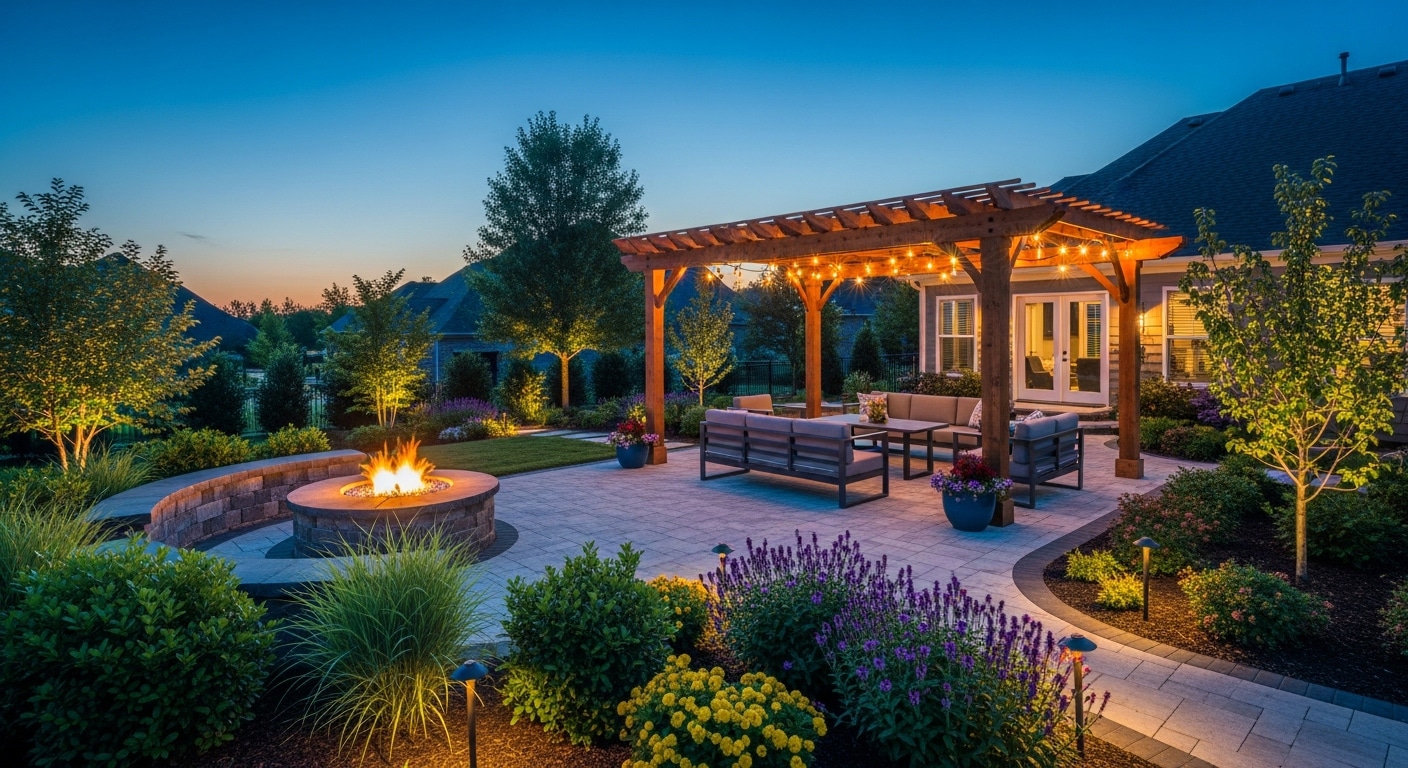
Concrete flatwork is one of the most common requests we handle across Tulsa and Broken Arrow — driveways, patios, sidewalks, pool surrounds, and retaining walls. It’s also one of the areas where the difference between quality installation and budget installation shows up most clearly within just a few years. Here’s what separates concrete work that lasts from work that doesn’t.
The Sub-Base Is Everything
Oklahoma’s clay soil is one of the most challenging substrates for concrete flatwork. Clay expands when wet and contracts when dry — and this movement, repeated over years, causes concrete slabs to crack, heave, and sink if the sub-base preparation isn’t done correctly. Quality concrete work in Tulsa and Broken Arrow starts with excavating to adequate depth, removing organic material, and establishing a compacted granular base that provides stable, uniform support for the slab.
The typical failure mode for cheap concrete work is a poured-over-subgrade approach — removing minimal soil, sometimes none at all, and pouring directly over the existing grade. This costs less upfront and looks identical to properly prepared work on day one. It looks very different in year three.
Concrete Thickness for Oklahoma’s Conditions
Minimum concrete thickness varies by application:
- Residential patio and sidewalk: 4 inches minimum. We typically pour at 4.5 inches for additional durability.
- Residential driveway: 5–6 inches, more where vehicles are expected to park regularly.
- Areas under outdoor kitchen or heavy structures: 6 inches with reinforcement.
- Pool surrounds: 4 inches minimum with fiber reinforcement throughout.
Reinforcement: Rebar vs Fiber
Steel rebar provides structural reinforcement that holds cracked concrete sections together and limits crack width. Fiber reinforcement (polypropylene or steel fibers mixed into the pour) reduces plastic shrinkage cracking during the curing phase. The two are not interchangeable — they address different failure modes. For Tulsa residential concrete, we use fiber reinforcement in the mix and rebar around the perimeter and at any areas subject to load concentration.
Control Joints: Predicting Where Concrete Cracks
All concrete cracks. The question is where it cracks and how badly. Control joints — sawcut or tooled grooves in the concrete surface — create planned weak points where cracks occur on our terms, not the concrete’s terms. Properly spaced control joints (typically every 8–10 feet in each direction for residential flatwork) produce hairline cracks in the joint that are essentially invisible, rather than random visible cracks across the middle of a slab.
We see concrete work regularly that has no control joints or inadequate control joint spacing. When that concrete cracks randomly across the face of a patio or driveway, there’s no remedy short of replacement. The cost of cutting proper control joints is minimal; the cost of not doing it shows up within 2–5 years in most Tulsa soil conditions.
Curing Time and Protection
Concrete achieves most of its design strength in the first 28 days — and how it’s treated during those 28 days significantly affects its long-term performance. During hot Oklahoma summers, concrete must be kept from drying too quickly: wet curing, curing compounds, or shade covering prevent surface cracking during the early strength gain period. Concrete poured in July without moisture control can develop surface craze cracking before the crew leaves the job site.
VistaScapes Design does concrete flatwork throughout Tulsa, Broken Arrow, Owasso, Jenks, and Bixby — driveways, patios, sidewalks, pool surrounds, and retaining walls. Call 918-779-1317 for a free estimate.