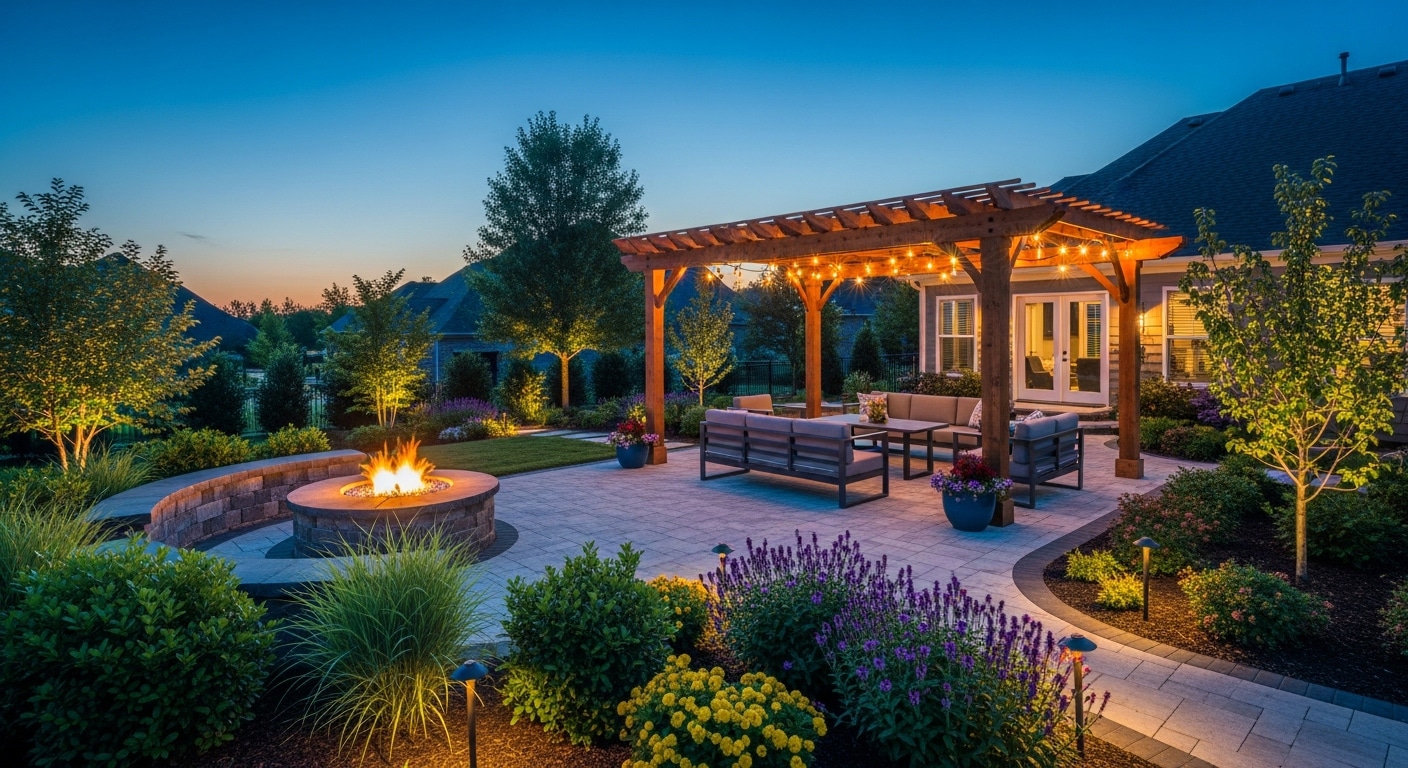
One of the most common questions VistaScapes & Design hears from Broken Arrow and Tulsa homeowners considering a new patio: should I go with concrete pavers or poured concrete? Both can look great. Both can be done well or poorly. The choice has real implications for longevity, repairability, and cost — and Oklahoma’s specific climate conditions make some of those implications more pronounced than they’d be in other states.
How Oklahoma’s Climate Affects Patio Materials
Oklahoma presents specific challenges for any patio surface:
- Expansive clay soils: Tulsa metro clay soils shrink and swell dramatically with moisture content — creating constant movement beneath any surface not built on a properly engineered base
- Temperature extremes: Oklahoma experiences both summer highs above 105°F and occasional winter ice storms — the thermal cycle stresses surface materials and joints
- Freeze-thaw cycles: While less severe than northern states, Oklahoma does experience freeze-thaw cycles that can penetrate porous concrete surfaces and cause spalling
- Heavy rainfall: Oklahoma’s spring storm season delivers intense rainfall that requires good drainage design regardless of surface material
Concrete Pavers: Pros and Cons for Oklahoma
- ✅ Repairability: Individual pavers can be removed and reset if the base settles — you don’t have to rip out the whole patio to address a problem area
- ✅ Freeze-thaw performance: Pavers handle freeze-thaw better than poured slabs — joints flex slightly, reducing cracking pressure
- ✅ Drainage options: Permeable paver installations can reduce surface runoff
- ✅ Design variety: Hundreds of colors, sizes, and patterns available
- ❌ Initial cost: Pavers typically cost 20-40% more than comparable poured concrete
- ❌ Joint maintenance: Polymeric sand joints may need refreshing every 5-10 years
- ❌ Weeds: Joints can allow weed growth if not properly installed and maintained with polymeric sand
Stamped Concrete: Pros and Cons for Oklahoma
- ✅ Lower initial cost: Typically 20-40% less expensive than comparable paver work
- ✅ Seamless appearance: No joints to maintain or fill
- ✅ Pattern variety: Stamped patterns mimic pavers, flagstone, or brick
- ❌ Cracking: Poured concrete almost always cracks eventually — control joints help direct cracking, but don’t eliminate it. In Oklahoma’s clay soils, cracking often happens within 5-10 years
- ❌ Irreparable cracking: A crack in a stamped patio is difficult to repair invisibly — unlike pavers, you can’t replace a section that matches
- ❌ Sealer maintenance: Stamped concrete requires resealing every 2-3 years to maintain appearance and protect against Oklahoma’s UV exposure
- ❌ Spalling risk: Improperly mixed or sealed concrete can spall (surface flaking) in Oklahoma’s freeze cycles
The VistaScapes Recommendation for Oklahoma
For the majority of outdoor living projects in the Broken Arrow and Tulsa market, VistaScapes recommends concrete pavers. The repairability advantage is significant in Oklahoma’s clay soils — bases will settle in some areas over time, and being able to reset individual pavers rather than saw-cut and repour a concrete section is a genuine long-term benefit. The initial cost premium pays back over time.
Stamped concrete makes sense for budget-driven projects, or when the design requires a seamless appearance that pavers can’t achieve. We build both — and we’re honest about the trade-offs either way.
Get a Free Patio Estimate in Broken Arrow or Tulsa
Call VistaScapes & Design at (918) 779-1317 or use our online form. We’ll visit your property, walk through material options with honest recommendations, and provide a detailed written estimate. Free on-site consultation — no pressure, no obligation.